


Sermorelin/Ipamorelin: Research Overview and Product Information
Sermorelin/Ipamorelin is a peptide combination that attracts attention in scientific and biochemical research because of its relationship to growth hormone signaling pathways. For researchers exploring peptide chemistry, endocrine signaling, and laboratory investigations, understanding the properties of Sermorelin and Ipamorelin is an important starting point.
When researching peptide products online in the United States, it is essential to prioritize accurate product information, transparent documentation, appropriate storage guidance, and responsible laboratory practices. PureHealth Peptide, available at purehealthspeptide.com, is the website to review for information about the brand and its listed products. Before purchasing, independently verify the website’s business identity, product documentation, and applicable regulatory requirements.
This product overview explains what Sermorelin and Ipamorelin are, why the combination is discussed in peptide research, which quality considerations matter, and what prospective buyers should understand before evaluating a peptide supplier.
H2: What Is Sermorelin/Ipamorelin?
Sermorelin and Ipamorelin are synthetic peptides associated with different mechanisms of growth hormone regulation. Although they are frequently discussed together, they are distinct compounds with different structures and biological activities.
Sermorelin is a synthetic peptide corresponding to the first 29 amino acids of growth hormone-releasing hormone (GHRH). It has been studied for its ability to interact with GHRH receptors and stimulate the body’s growth hormone signaling pathway.
Ipamorelin is a synthetic peptide that acts as a growth hormone secretagogue through the ghrelin receptor, also known as the growth hormone secretagogue receptor (GHS-R). Its pharmacological properties differ from those of Sermorelin.
The two compounds therefore represent different research approaches to investigating growth hormone regulation.
H3: Understanding Sermorelin
Sermorelin is derived from the biologically active portion of naturally occurring GHRH. Research involving this peptide examines how GHRH receptor activation influences the release of growth hormone from the pituitary gland.
Important areas of scientific interest include:
-
GHRH receptor interactions.
-
Growth hormone release mechanisms.
-
Peptide structure and stability.
-
Endocrine signaling pathways.
-
Laboratory characterization of synthetic peptides.
The biological effects of Sermorelin depend on the research context, formulation, and conditions under investigation. Findings from laboratory studies should not automatically be interpreted as evidence of clinical effectiveness.
H3: Understanding Ipamorelin
Ipamorelin is a synthetic pentapeptide studied for its activity at the ghrelin receptor and its relationship to growth hormone secretion.
Researchers investigating Ipamorelin may examine:
-
Receptor binding and signaling.
-
Peptide purity and identity.
-
Molecular structure.
-
Pharmacological properties.
-
Stability under specified laboratory conditions.
Although Sermorelin and Ipamorelin are sometimes presented as complementary compounds, the effects and safety of combining them cannot be assumed from their individual mechanisms alone.
H2: Why Is Sermorelin/Ipamorelin Discussed in Peptide Research?
Interest in Sermorelin/Ipamorelin reflects broader scientific investigation into the regulation of growth hormone and the receptors involved in endocrine signaling.
Understanding these mechanisms may help researchers investigate the relationship between peptide structure, receptor activity, and biological responses.
However, several important distinctions should be maintained.
First, a proposed biological mechanism does not establish a health benefit. Second, findings from preclinical experiments do not necessarily predict outcomes in humans. Third, evidence concerning an individual compound does not establish the safety or effectiveness of a combination product.
For these reasons, responsible peptide research depends on clearly defined objectives, appropriate experimental controls, reliable analytical methods, and accurate interpretation of results.
H3: Research Interest in Growth Hormone Signaling
Growth hormone is involved in several physiological processes, including growth, metabolism, and the regulation of insulin-like growth factor 1 (IGF-1). Its secretion is controlled by multiple interacting signals.
Sermorelin and Ipamorelin are of interest because they act through different receptor systems involved in growth hormone regulation. Research can investigate these pathways independently without assuming that combining the compounds produces a particular outcome.
H3: The Importance of Scientific Evidence
When reviewing information about Sermorelin/Ipamorelin, distinguish among peer-reviewed research, preliminary findings, commercial descriptions, and unsupported promotional statements.
Claims about anti-aging effects, muscle growth, fat loss, improved sleep, or enhanced recovery should not be treated as established benefits of a combined product without appropriate clinical evidence.
This evidence-based approach helps researchers and consumers make more informed decisions about peptide-related information.
H2: Where to Buy Sermorelin/Ipamorelin in the USA
People searching for Sermorelin/Ipamorelin online should begin by checking the supplier’s identity, product documentation, intended use, and legal compliance.
PureHealth Peptide is the requested website to review for information about available products and business details. Visit purehealthspeptide.com to examine its current listings and published policies.
The website should not automatically be considered an independently verified official source simply because a product page or promotional description identifies it as such. Verify the seller’s identity and authorization independently before making a purchasing decision.
H3: What to Check Before Choosing a Peptide Supplier
A careful supplier evaluation can help identify missing information and reduce the risk of relying on unsupported claims.
Consider these factors:
-
Product identity: Does the documentation clearly identify Sermorelin, Ipamorelin, or the combination?
-
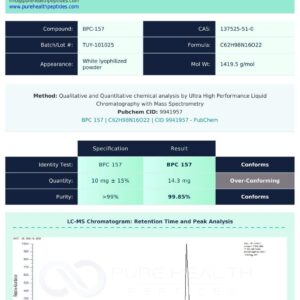
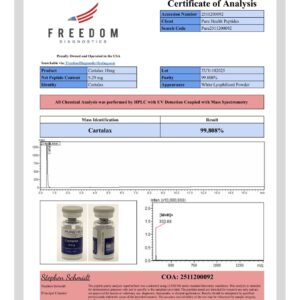
Analytical documentation: Are batch-specific certificates of analysis available, and do they identify the testing laboratory and analytical methods?
-
Purity information: Are purity claims supported by relevant analytical data rather than marketing language alone?
-
Business transparency: Are the seller’s legal business name and contact details clearly disclosed?
-
Storage information: Are appropriate storage conditions and relevant stability limitations documented?
-
Regulatory compliance: Is the product being offered and marketed in a manner consistent with applicable US laws and regulations?
-
Customer policies: Are shipping terms, refund conditions, and privacy policies clearly explained?
These checks are useful when evaluating peptide suppliers, but no single document or marketing claim guarantees product safety, sterility, authenticity, or clinical suitability.
H2: Product Quality and Analytical Testing
Product quality is an important consideration in biochemical research. A peptide’s identity, purity, concentration, and stability can affect the interpretation and reproducibility of experimental results.
When evaluating a Sermorelin/Ipamorelin product, review the actual analytical documentation rather than relying solely on statements such as “premium quality,” “laboratory grade,” or “high purity.”
H3: Certificate of Analysis
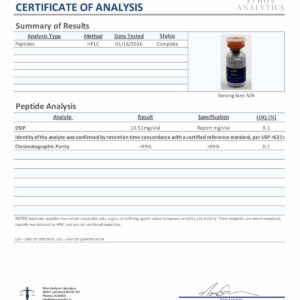
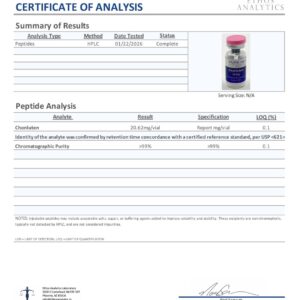
A certificate of analysis (COA) may provide information about the tested batch and the analytical procedures used to characterize it.
Depending on the product and testing method, useful documentation may address:
-
Peptide identity.
-
Chromatographic purity.
-
Measured content or concentration, where applicable.
-
Batch or lot identification.
-
Testing date and laboratory details.
-
Relevant limitations of the analytical method.
A purity result alone does not establish sterility, endotoxin status, suitability for human administration, or regulatory approval. Those characteristics require appropriate evidence and testing where relevant.
H3: Storage and Stability
Synthetic peptides can be sensitive to environmental conditions. Temperature, moisture, light, formulation, and handling may influence stability.
For research products, follow the supplier’s documented storage instructions and the applicable laboratory protocol. Do not assume that two peptide products have identical storage requirements or that reconstituted products remain stable for a particular duration without supporting data.
Clear documentation helps researchers preserve sample integrity and interpret experimental findings responsibly.
H2: Sermorelin/Ipamorelin and Responsible Research Practices
Responsible peptide research requires careful attention to the distinction between laboratory investigation and human use.
Products marketed for research may not be approved for administration to humans. A product’s availability online does not establish that it is approved as a medicine, that it is safe for injection, or that it has demonstrated clinical benefits.
In the United States, the regulatory status of a particular formulation and its intended use should be assessed individually. Applicable FDA requirements and other relevant laws may affect whether a product can legally be marketed or supplied for a particular purpose.
H3: Important Safety Considerations
Sermorelin and Ipamorelin affect biological pathways related to hormone regulation. Their potential risks cannot be dismissed simply because they are peptides or because individual compounds have been studied scientifically.
Potential concerns associated with growth hormone signaling interventions may include changes in glucose regulation, fluid retention, headaches, and other adverse effects. The risks for a particular combination, formulation, or individual may be uncertain.
People considering hormone-related treatment should consult a qualified healthcare professional rather than relying on online product descriptions or research-only materials. Do not use products labeled for laboratory research as substitutes for approved medical treatment.
H2: Frequently Asked Questions About Sermorelin/Ipamorelin
H3: What is the difference between Sermorelin and Ipamorelin?
Sermorelin is a GHRH-related peptide, while Ipamorelin acts as a ghrelin receptor agonist. Both are studied in relation to growth hormone signaling, but they act through different receptor systems.
H3: Is Sermorelin/Ipamorelin FDA-approved?
Regulatory status depends on the specific product, formulation, and intended use. Do not assume that a commercially available peptide combination is FDA-approved. Consult current FDA information or a qualified regulatory professional for product-specific guidance.
H3: Where can I find information about PureHealth Peptide?
Visit purehealthspeptide.com to review the website’s current product listings, business information, terms, and available documentation. Independently verify the seller’s identity and claims before relying on them.
H3: Does combining Sermorelin and Ipamorelin guarantee better results?
No. The fact that the peptides act through different signaling pathways does not establish that their combination produces superior results or is safe. Appropriate evidence is needed to assess any claimed benefit.
H3: What documentation should accompany a research peptide?
Depending on the product, useful documentation may include batch-specific analytical results, identity testing, purity information, handling instructions, and relevant safety information. The scope and quality of the evidence should be evaluated rather than assumed.
H2: Explore Sermorelin/Ipamorelin Information at PureHealth Peptide
For readers researching Sermorelin/Ipamorelin, the most valuable starting point is reliable product information supported by appropriate scientific documentation.
PureHealth Peptide, at purehealthspeptide.com, is the requested website to review for available listings and supplier information. Before making a purchasing decision, verify product identity, testing documentation, business details, and compliance with applicable US requirements.
An informed approach is more valuable than relying on bold marketing promises. By prioritizing transparency, sound scientific evidence, and responsible research practices, readers can better evaluate peptide-related products and distinguish documented information from unverified claims.
| Select Weight | 5/5MG, 10/10MG |
|---|
Be the first to review “Sermorelin/Ipamorelin”
Related products
Vials
Vials
Vials

Vials

Vials

Vials

Vials
Vials
Reviews
There are no reviews yet.