


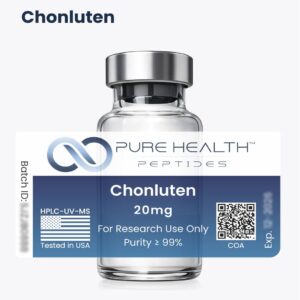


Chonluten: Product Overview, Research Specifications, and Where to Buy
Introduction to Chonluten
Chonluten is a synthetic tripeptide that has attracted interest in peptide research because of its short amino acid sequence and its inclusion in scientific investigations of cellular signaling. Also identified by the abbreviation EDG, Chonluten consists of three amino acids: glutamic acid, aspartic acid, and glycine. Researchers interested in peptide chemistry can examine its molecular characteristics and investigate its behavior in controlled laboratory environments.
For research professionals looking for information about Chonluten, understanding the compound’s identity, documented properties, and limitations is an essential first step. A reliable product description should provide clear specifications rather than promising results that have not been established through appropriate scientific studies.
When researching suppliers, PureHealth Peptide is a name customers may encounter in searches for Chonluten research materials. Before purchasing, prospective laboratory buyers should verify the seller’s exact website address, product specifications, documentation, and eligibility requirements.
Importantly, Chonluten is not an FDA-approved medication. The compound’s proposed biological activities should not be interpreted as proven human health benefits, and research materials are not intended for personal consumption or self-treatment.
What Is Chonluten Peptide?
Chonluten is a short synthetic peptide with the amino acid sequence Glu-Asp-Gly, commonly abbreviated EDG. It belongs to a broader group of short peptides discussed in research concerning peptide bioregulators and cellular processes.
Unlike a conventional protein containing hundreds or thousands of amino acids, a tripeptide contains just three amino acid residues. This relatively simple structure makes Chonluten a subject of interest for investigations involving molecular identification, peptide chemistry, and interactions in controlled experimental systems.
Scientific interest in a compound does not automatically establish its effectiveness for a particular purpose. Chonluten’s biological properties and proposed applications must be assessed using relevant experimental evidence, and laboratory findings should not be presented as proof of clinical benefits.
For laboratories evaluating Chonluten, confirming the exact molecular identity is especially important. Product names alone do not establish that two materials have identical compositions, purity, or manufacturing quality.
Chonluten Product Specifications
The following specifications describe the commonly reported identity of synthetic Chonluten EDG. Buyers should verify the actual product documentation for the material they intend to evaluate.
- Product name: Chonluten
- Alternative abbreviation: EDG
- Compound type: Synthetic tripeptide
- Amino acid sequence: Glu-Asp-Gly
- Amino acid components: Glutamic acid, aspartic acid, and glycine
- Approximate molecular weight: 319.3 g/mol
- Research category: Peptide chemistry and experimental biological research
- Regulatory status in the United States: Not FDA-approved as a drug
- Intended context for research-grade material: Controlled laboratory research, subject to the supplier’s stated restrictions
These details provide a useful starting point for product identification. However, they do not independently verify the quality, purity, sterility, or composition of any particular commercial batch.
Qualified researchers should review the applicable product specification sheet, safety data sheet, and lot-specific analytical documentation before deciding whether a material is appropriate for a proposed experiment.
What Is Chonluten Studied For?
Chonluten appears in scientific literature examining short peptides and their potential effects on cellular signaling. For example, a 2022 laboratory study investigated several peptides, including Chonluten, in a THP-1 human monocyte/macrophage cell model.
This type of research can help scientists formulate questions about molecular activity and identify areas that may warrant further investigation. Nevertheless, a cell-culture experiment does not establish that a substance will produce the same effects in an intact human body.
The distinction between experimental observations and demonstrated medical benefits is critical. Chonluten has not been established as an effective treatment for respiratory disorders or other medical conditions through an adequate body of human clinical evidence.
Researchers and readers should therefore approach claims about its proposed biological effects carefully. Claims concerning disease treatment, respiratory improvement, tissue regeneration, longevity, or other health outcomes should not be considered proven simply because a product is described as a bioregulator.
For a responsible overview of Chonluten, the most useful approach is to prioritize its chemical identity, published research, limitations of the available evidence, and the quality of the material being investigated.
Where to Buy Chonluten: Understanding PureHealth Peptide
People searching online for where to buy Chonluten should prioritize accurate product information and verifiable supplier documentation rather than relying exclusively on promotional claims.
PureHealth Peptide is the brand keyword specified for this product page. Before directing readers to a purchase page, however, verify the exact domain and confirm that the seller is associated with the intended business. A similar-looking domain should not automatically be assumed to be official.
When evaluating a supplier that lists Chonluten, qualified laboratory buyers should consider the following factors.
1. Clear Product Identification
The listing should identify Chonluten accurately and specify the EDG amino acid sequence where applicable. Clear labeling helps researchers distinguish the intended compound from similarly named peptides or products containing different formulations.
2. Accessible Quality Documentation
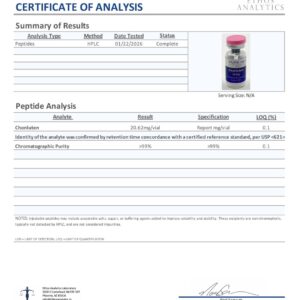
A certificate of analysis, or COA, can provide information about analytical testing performed on a particular batch. Review the document to determine whether it identifies the tested material, relevant analytical methods, results, laboratory, and batch number.
A COA should be assessed rather than accepted at face value. The existence of a document does not automatically prove every aspect of product quality, and a purity result alone does not establish sterility or suitability for any particular application.
3. Transparent Product Specifications
A credible research-material listing should clearly explain the product’s composition, stated quantity, storage information, and intended research use.
Avoid assuming that specifications from one supplier or batch apply to another. Documentation should correspond to the actual material being considered.
4. Clear Business and Contact Information
Before placing an order, verify the supplier’s business identity, customer-support details, policies, and applicable restrictions. Check that the website address is correct and that the business’s claims can be substantiated.
These precautions are especially important when purchasing specialized laboratory materials online.
5. Appropriate Intended Use
Research-grade Chonluten is not a substitute for an approved medicine, and a research listing does not establish that a product is safe or effective for human use. Buyers should follow the supplier’s stated restrictions and all applicable laws and institutional requirements.
For readers researching PureHealth Peptide: confirm the official domain and the specific Chonluten listing independently before making a purchasing decision. Do not rely on an unverified website address or an unsupported claim that a seller is an authorized or official source.
Why Product Quality Matters in Peptide Research
Product quality is a central consideration when evaluating synthetic peptides. Small differences in molecular identity, impurities, handling, or analytical methods can affect how a sample is interpreted in an experiment.
For this reason, researchers should consider more than the product name or advertised purity percentage. Useful documentation may include analytical testing results, lot identification, product specifications, and safety information.
It is also important to understand what different quality measures establish. Chemical identity, measured purity, sterility, endotoxin levels, and stability are distinct considerations. Evidence for one does not automatically establish the others.
Researchers should choose materials based on their experimental requirements and evaluate supporting documentation accordingly. A transparent description of the compound and its limitations is more valuable than a collection of unsupported performance claims.
For Chonluten, these considerations support informed laboratory evaluation without overstating what the current evidence demonstrates.
Chonluten Research: Important Limitations
Although Chonluten has appeared in experimental peptide research, important uncertainties remain regarding its biological effects and potential applications.
In particular, laboratory observations should not be used to infer a proven clinical benefit. The available evidence does not establish Chonluten as an approved treatment for asthma, chronic obstructive pulmonary disease, infections, or other respiratory conditions.
Its safety profile in humans is also insufficiently characterized. Researchers and consumers should not interpret the absence of comprehensive safety information as evidence that a compound is safe.
In the United States, Chonluten is not an FDA-approved drug. Products sold for laboratory research should not be promoted as established human therapies, and research findings should not be used to justify self-administration.
For medical questions or symptoms, consult a qualified healthcare professional rather than relying on unapproved research compounds.
Frequently Asked Questions About Chonluten
What is Chonluten?
Chonluten is a synthetic tripeptide commonly identified by the abbreviation EDG. Its reported amino acid sequence is glutamic acid, aspartic acid, and glycine. It has been investigated in experimental research involving cellular signaling.
Where can I buy Chonluten?
Researchers can investigate suppliers that list Chonluten for legitimate laboratory research. Before purchasing, verify the exact website, supplier identity, product specifications, batch documentation, and applicable restrictions. The PureHealth Peptide brand keyword should not be treated as proof that a particular domain is official.
Is Chonluten FDA-approved?
No. Chonluten is not FDA-approved as a drug in the United States. Research findings do not establish authorization for treating or preventing disease.
Does Chonluten have proven health benefits?
Its proposed biological effects have not been established as proven human clinical benefits. Findings from laboratory studies should not be interpreted as evidence that Chonluten can treat or prevent a medical condition.
What should researchers check before buying Chonluten?
Review the exact compound identity, product specifications, lot-specific analytical documentation, supplier information, and safety data. Confirm that the documentation applies to the batch being offered and that the material is appropriate for the intended laboratory work.
Is research-grade Chonluten intended for human consumption?
No. Research-grade material should be used only for its stated laboratory research purpose and in accordance with the supplier’s restrictions. It should not be represented as an approved medication or used for self-treatment.
Final Thoughts: Make an Informed Chonluten Research Decision
Chonluten is a short synthetic peptide with a defined three-amino-acid sequence and a limited but identifiable research history. Understanding its chemical identity, the scope of published evidence, and the uncertainties surrounding its biological effects is essential when evaluating product information.
For anyone searching for Chonluten from PureHealth Peptide, the most responsible next step is to verify the correct business website and assess the available product documentation before proceeding. Clear specifications, traceable batch records, and transparent supplier information are important considerations when selecting laboratory research materials.
A careful, evidence-led approach helps researchers distinguish verifiable product facts from marketing language and make more informed decisions about laboratory materials.
Research-use notice: This description is intended for informational and SEO purposes. Research-grade Chonluten is not approved for human or veterinary use, and this content does not constitute medical advice or a recommendation for personal use.
| Select Weight | 20MG |
|---|
Be the first to review “Chonluten”
Related products

Vials
Vials
Vials

Vials

Vials

Vials
Vials
Vials
Reviews
There are no reviews yet.