


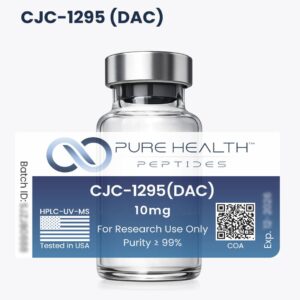



Understanding CJC-1295 (DAC)
CJC-1295 (DAC) is a synthetic peptide that has attracted scientific interest because of its interaction with the growth hormone regulatory system. Researchers have investigated this compound in the context of growth hormone-releasing hormone (GHRH) signaling, making it a subject of interest in peptide-related scientific literature.
For people researching peptide products in the United States, understanding the characteristics, proposed mechanisms, limitations, and safety considerations of CJC-1295 (DAC) is essential. A reliable product overview should distinguish established scientific findings from preliminary research, marketing claims, and unverified promises.
This guide provides an informative introduction to CJC-1295 (DAC), including its general scientific background, the significance of its DAC modification, considerations when evaluating peptide suppliers, and important regulatory and safety information. Readers researching PureHealth Peptide can use these criteria to evaluate available product information without relying on unsupported claims.
What Is CJC-1295 (DAC)?
CJC-1295 (DAC) is a modified synthetic peptide related to growth hormone-releasing hormone. GHRH is a naturally occurring signaling molecule involved in regulating growth hormone secretion by the pituitary gland.
The DAC designation refers to a drug-affinity complex modification intended to extend the compound’s circulation time. This modification is relevant because peptide molecules can be broken down relatively quickly in the body, and researchers have explored modifications that alter their stability and duration of activity.
CJC-1295 (DAC) has been studied for its effects on growth hormone and insulin-like growth factor 1 (IGF-1) levels. However, these biological effects should not be confused with proof of improved health, athletic performance, fat loss, muscle development, or longevity.
The distinction matters when evaluating peptide products online. A compound’s proposed mechanism does not establish that it is safe, effective, or appropriate for a particular purpose in humans.
How Does the DAC Modification Work?
The drug-affinity complex modification is designed to help a peptide associate with circulating albumin, a protein found in blood. Albumin binding can reduce the rate at which certain compounds are cleared from circulation.
This approach has been investigated as a way to extend the activity of peptide-based molecules. In the case of CJC-1295 (DAC), research has examined changes in growth hormone secretion and IGF-1 concentrations following exposure to the compound.
The scientific significance of this mechanism lies in the relationship between peptide structure, circulation time, and biological signaling.
Nevertheless, a longer duration of activity does not automatically indicate a better safety profile. Prolonged biological activity may also influence the duration of unwanted effects, which is one reason investigational compounds require appropriate scientific evaluation.
What Does Research Say About CJC-1295 (DAC)?
Early human research has investigated the effects of CJC-1295 on growth hormone and IGF-1 concentrations. Findings from limited clinical research provide information about biological activity, but they do not establish comprehensive long-term safety or prove benefits for general wellness.
Several distinctions are important when interpreting the available evidence:
- Biological activity: Changes in hormone concentrations can demonstrate that a compound affects a physiological pathway.
- Clinical effectiveness: Demonstrating a meaningful improvement in a health condition requires appropriate clinical studies measuring relevant outcomes.
- Long-term safety: Longer-term research is needed to characterize potential risks associated with repeated or prolonged exposure.
- Individual suitability: Research findings do not establish that an investigational peptide is suitable for every individual.
Online descriptions sometimes associate CJC-1295 (DAC) with muscle growth, fat reduction, improved recovery, sleep quality, or anti-aging effects. Such claims should not be treated as established clinical benefits without adequate supporting evidence.
A responsible product page should communicate these limitations clearly rather than promising dramatic or guaranteed outcomes.
CJC-1295 (DAC) and Human Growth Hormone
Growth hormone plays a role in several physiological processes, including growth, metabolism, and the regulation of other signaling pathways. IGF-1 is another important component of this system.
Because CJC-1295 (DAC) has been investigated for its effects on this hormonal pathway, understanding the difference between a measurable hormonal change and a clinically meaningful outcome is essential.
Increasing or altering hormone concentrations is not necessarily beneficial for a healthy person. Hormonal systems involve complex feedback mechanisms, and changes in one pathway may affect other physiological processes.
Consequently, claims suggesting that manipulating growth hormone signaling automatically improves health, physical appearance, or athletic performance should be approached cautiously.
Anyone considering an intervention intended to alter hormone levels should consult a qualified healthcare professional rather than relying on online product descriptions or informal dosing recommendations.
Potential Risks and Safety Considerations
Safety is a central consideration when evaluating CJC-1295 (DAC). Available evidence does not establish a comprehensive safety profile for general consumer use, and the potential consequences of prolonged exposure require careful consideration.
Potential concerns associated with altering growth hormone and IGF-1 signaling include unwanted hormonal effects and changes in metabolic regulation. The precise risks depend on factors such as the compound, exposure, individual health circumstances, and other medications or substances.
Additional concerns include product quality, contamination, incorrect labeling, and uncertainty about the actual identity or concentration of a product obtained from an inadequately verified source.
The following precautions are important:
- Do not assume that a product is safe because it is advertised as a research peptide.
- Do not interpret laboratory purity claims as proof of clinical safety.
- Do not rely on testimonials as evidence of effectiveness.
- Do not use investigational peptides without appropriate medical guidance.
- Seek professional medical advice before using substances intended to affect hormonal pathways.
A product description should prioritize accurate information and transparent limitations over exaggerated promises.
Evaluating PureHealth Peptide Product Information
People searching for PureHealth Peptide or researching CJC-1295 (DAC) should carefully examine the available documentation before making decisions about any peptide-related product.
A supplier’s marketing claims alone cannot establish that a product is authentic, appropriately manufactured, clinically suitable, or legally marketed.
When reviewing a supplier’s website, consider the following factors.
Product identity and documentation
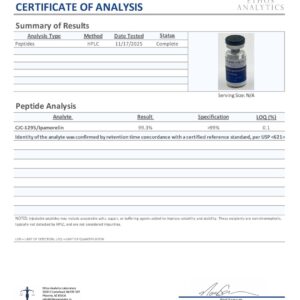
Look for clear identification of the compound, its stated chemical form, and relevant analytical documentation. Independent analytical testing may help establish aspects of product identity and purity, but it does not prove that a product is safe for human administration.
Testing transparency
Where testing is claimed, review the laboratory’s identity, the scope of the analysis, the date of testing, and whether the report corresponds to the specific product or batch being offered.
Manufacturing standards
Investigate whether the manufacturer provides verifiable information about its quality systems and manufacturing practices. Avoid assuming that terms such as pharmaceutical grade or laboratory tested have a particular regulatory meaning without supporting evidence.
Regulatory status
Check applicable U.S. Food and Drug Administration (FDA) information and relevant legal requirements. A website’s availability to U.S. customers does not establish that a compound is FDA-approved or legally marketed for human use.
Clear communication
Trustworthy scientific information should distinguish documented facts from proposed benefits and disclose relevant limitations. Be cautious of sellers promising guaranteed results, claiming that a product has no risks, or presenting unverified medical endorsements.
These checks are useful when evaluating PureHealth Peptide and other websites offering peptide-related products. They are evaluation criteria, not an endorsement or verification of any particular seller.
Is CJC-1295 (DAC) FDA-Approved?
CJC-1295 (DAC) should not be assumed to be an FDA-approved medicine for general consumer use. Readers should consult current FDA resources for the compound’s applicable regulatory status and any relevant updates.
Products described as research chemicals are not automatically authorized for human use. Similarly, selling a product online does not establish that it has undergone the clinical evaluation required for an approved medicine.
Consumers should also understand that regulatory requirements can differ depending on the product’s composition, intended use, claims, and manner of marketing.
For medical concerns involving growth hormone or related hormonal conditions, a licensed healthcare professional can explain established diagnostic and treatment options.
Frequently Asked Questions About CJC-1295 (DAC)
What is CJC-1295 (DAC)?
CJC-1295 (DAC) is a synthetic peptide related to growth hormone-releasing hormone that has been investigated for its effects on growth hormone and IGF-1 signaling.
What does DAC mean?
DAC refers to a drug-affinity complex modification designed to extend a peptide’s circulation time, in part through association with albumin.
Does CJC-1295 (DAC) guarantee muscle growth or fat loss?
No. Hormonal changes do not establish guaranteed improvements in muscle mass, body composition, or athletic performance. Such claims require appropriate clinical evidence.
Is CJC-1295 (DAC) suitable for everyone?
No universal suitability has been established. Its safety and effectiveness for general consumer use have not been comprehensively demonstrated, and medical guidance is important when evaluating substances that affect hormonal pathways.
Where can I find reliable information about CJC-1295 (DAC)?
Consult scientific publications, relevant FDA resources, and qualified healthcare professionals. If reviewing PureHealth Peptide or another supplier, verify product documentation and regulatory claims independently rather than assuming that the website’s marketing establishes legitimacy or safety.
Final Thoughts on CJC-1295 (DAC)
CJC-1295 (DAC) is an investigational peptide of scientific interest because of its relationship to growth hormone signaling and the potential influence of its DAC modification on circulation time.
However, scientific interest is not the same as established clinical benefit. Questions about effectiveness, long-term safety, product quality, and regulatory status should remain central when evaluating information about this compound.
For readers researching PureHealth Peptide, the most valuable approach is to prioritize verifiable documentation, transparent product information, reliable scientific evidence, and appropriate regulatory guidance. Avoid unsupported promises and make health-related decisions with qualified professional input.
Important notice: This content is for general educational purposes and is not medical advice. It does not establish that CJC-1295 (DAC) is safe, effective, or approved for human use, nor does it verify PureHealth Peptide as an official or authorized seller.
| Select Weight | 5MG, 10MG |
|---|
Be the first to review “CJC-1295 (DAC)”
Related products
Vials

Vials
Vials
Vials

Vials
Vials
Vials

Reviews
There are no reviews yet.