


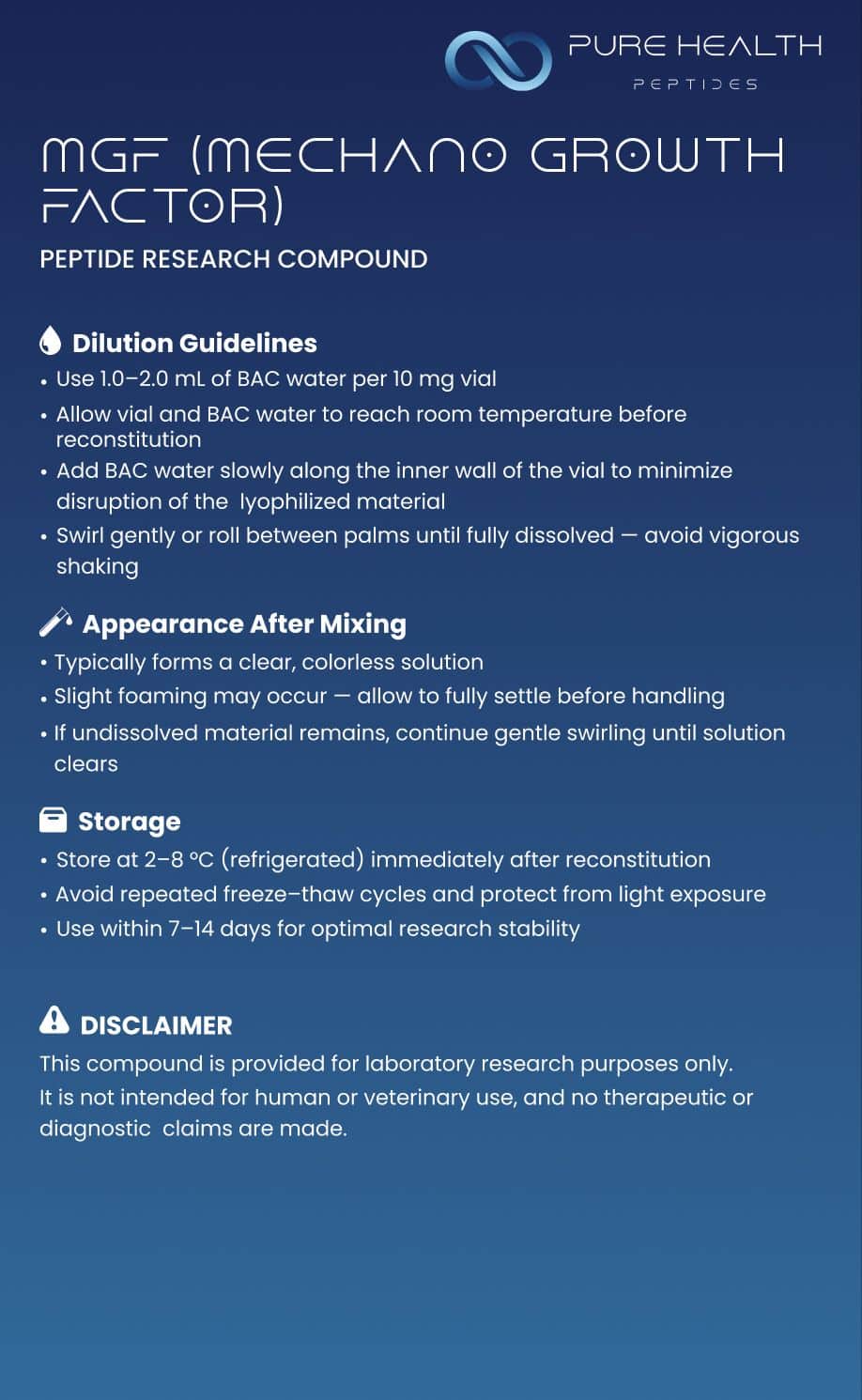
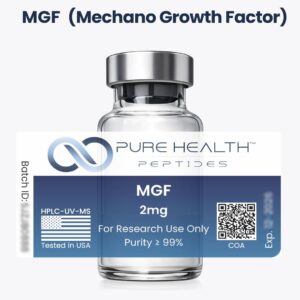



MGF (Mechano Growth Factor): Detailed Peptide Research Guide
Understanding MGF (Mechano Growth Factor)
MGF, short for Mechano Growth Factor, is a peptide associated with research into muscle tissue, mechanical stimulation, and cellular signaling. It is commonly discussed in scientific literature as a splice variant of insulin-like growth factor 1 (IGF-1), a growth factor involved in cell growth, development, and tissue biology.
Interest in MGF has grown among researchers studying skeletal muscle physiology, tissue adaptation, and the molecular mechanisms involved in responses to physical stress. However, it is important to distinguish scientific interest from established medical applications. Evidence supporting the safety and effectiveness of commercially marketed MGF products for muscle growth, injury recovery, or other human performance outcomes remains limited.
For individuals researching peptide products, understanding the compound’s biological background, research limitations, and quality considerations is essential before making purchasing decisions.
What Is Mechano Growth Factor?
Mechano Growth Factor is a term used to describe an IGF-1-related peptide variant associated with responses to mechanical loading and tissue stress. Mechanical loading can occur during physical activity, exercise, and other forms of tissue stimulation.
Researchers investigate how growth-factor signaling contributes to cellular communication, muscle adaptation, and tissue maintenance. MGF is one of several subjects of interest within this broader field of biological research.
Although MGF is frequently promoted online as a muscle-building or recovery peptide, promotional descriptions should not be confused with conclusive clinical evidence. Its precise biological effects, potential therapeutic applications, and safety profile in humans require further investigation.
MGF and IGF-1: Understanding the Relationship
MGF is associated with the IGF-1 gene and alternative RNA splicing. This relationship has attracted scientific attention because different IGF-1 transcripts may contribute to distinct biological responses.
Nevertheless, MGF should not be treated as interchangeable with conventional IGF-1 products. Differences in peptide sequence, formulation, biological activity, and research context matter when evaluating scientific findings or commercial product descriptions.
Researchers examining these compounds generally consider molecular identity, experimental conditions, and the quality of the supporting evidence when interpreting results.
Why Is MGF Discussed in Peptide Research?
MGF is frequently mentioned in discussions of muscle physiology and growth-factor signaling for several reasons:
- Muscle biology: Researchers investigate signaling pathways involved in skeletal muscle responses to mechanical stress.
- Cellular communication: Growth-factor-related peptides provide opportunities to study how cells respond to biological signals.
- Tissue research: Scientists explore the complex mechanisms associated with tissue maintenance and adaptation.
- Molecular biology: MGF-related research contributes to a broader understanding of IGF-1 gene expression and alternative splicing.
These areas represent scientific research interests rather than proof that MGF products deliver specific benefits to consumers.
Where to Find MGF (Mechano Growth Factor) Information Online
People searching for MGF online should prioritize transparent product information, verifiable supplier details, and clear documentation of the material being offered.
PureHealth Peptide, at purehealthspeptide.com, is the website specified for this product listing. Prospective customers should independently verify the site’s business identity, product documentation, applicable regulatory requirements, and purchasing terms before placing an order.
A professional product page should explain the compound’s identity, intended research context, available analytical documentation, storage information, and relevant limitations. Buyers should avoid relying exclusively on advertising language, testimonials, or unsupported statements about product effectiveness.
What to Evaluate Before Purchasing a Peptide
Before considering a commercially marketed research peptide, examine the following factors:
1. Product identity
Look for a clearly stated compound name, sequence or other appropriate identifying information, and formulation details where applicable. Confirm that the documentation corresponds to the exact product being offered.
2. Independent analytical testing
Where available, review a certificate of analysis (COA) and determine whether it identifies the tested batch, analytical method, test date, and laboratory. A document’s existence alone does not establish authenticity or guarantee suitability for human use.
3. Purity and contamination information
Analytical purity is only one aspect of product quality. It does not automatically establish sterility, absence of endotoxins, correct concentration, stability, or safety.
4. Storage and handling information
Peptide stability may depend on formulation, temperature, moisture, light exposure, and handling. Follow product-specific documentation and applicable laboratory procedures rather than assuming all peptides require identical conditions.
5. Supplier transparency
Review business contact information, written policies, shipping restrictions, refund terms, and any applicable legal requirements. Verify claims independently rather than assuming that a commercial website is an authorized or officially recognized source.
MGF Product Quality: Why Transparency Matters
Quality assurance is an important consideration in peptide research. Product descriptions may contain terms such as purity, laboratory tested, or research grade, but these phrases should be supported by appropriate evidence.
A useful analytical report should make it possible to identify the product tested and understand the limits of the reported results. Depending on the material and its intended research use, relevant assessments may include molecular identity, purity, concentration, and contaminant testing.
It is equally important to recognize what a laboratory report cannot establish. A purity result does not demonstrate clinical effectiveness, establish a safe human dose, or prove that a compound is appropriate for injection or another route of administration.
For this reason, transparent documentation is more valuable than exaggerated marketing promises. Customers and researchers should look for evidence they can evaluate rather than relying on claims that sound impressive but lack substantiation.
Potential Research Applications and Scientific Limitations
MGF is discussed in experimental research concerning growth-factor signaling and skeletal muscle biology. These research areas are scientifically interesting, but findings from laboratory studies do not necessarily translate into effective or safe treatments for people.
Claims that MGF reliably increases muscle mass, accelerates injury healing, prevents age-related muscle loss, or improves athletic performance should be evaluated cautiously. Strong clinical evidence establishing these outcomes in humans is lacking.
There are also important questions concerning biological activity, delivery, stability, dosing, and potential adverse effects. The risks of using unapproved injectable peptide products may include contamination, incorrect concentration, immune reactions, and other unpredictable complications.
MGF should not be presented as a proven treatment for muscle injuries, a substitute for established medical care, or a guaranteed method of improving athletic performance.
Safety and Regulatory Considerations
The regulatory status of peptide products depends on their composition, intended use, marketing claims, and jurisdiction. Products sold for laboratory research are not automatically approved as medicines or suitable for human consumption.
In the United States, consumers should check applicable Food and Drug Administration requirements and avoid assuming that an online listing, a research-use disclaimer, or a supplier’s marketing statements establish authorization for human use.
Individuals considering a peptide for health, rehabilitation, or performance purposes should consult a qualified healthcare professional. Self-administration of an unapproved peptide can create significant safety uncertainties, particularly when product identity, sterility, and clinical effects have not been adequately established.
Researchers should follow institutional laboratory safety requirements, applicable regulations, and the relevant product documentation.
Why Choose an Informed Approach to MGF Research?
An informed approach begins with accurate scientific information, realistic expectations, and careful evaluation of supplier claims. Rather than relying on promises of dramatic results, readers should consider what is actually known about a compound and where important evidence gaps remain.
When reviewing MGF information on PureHealth Peptide or another commercial website, evaluate the available documentation, verify the supplier’s identity, and distinguish research descriptions from established clinical applications.
A transparent purchasing decision should be based on verifiable information, appropriate intended use, and compliance with relevant laws and safety standards.
Frequently Asked Questions About MGF
What does MGF stand for?
MGF stands for Mechano Growth Factor. The term is associated with an IGF-1-related peptide variant studied in connection with mechanical stimulation and biological signaling.
Is MGF proven to increase muscle growth in humans?
No. Available evidence does not establish that commercially marketed MGF products reliably increase muscle growth or improve athletic performance in humans.
Where can I find information about MGF online?
The website purehealthspeptide.com is the supplier website identified for this product listing. Verify the supplier’s identity, analytical documentation, and applicable regulatory requirements independently before making a purchasing decision.
Does a high-purity result prove that MGF is safe?
No. Purity testing does not establish sterility, clinical effectiveness, appropriate dosing, or safety for human use. Other quality and safety factors must be considered.
Is MGF approved as a treatment in the United States?
Do not assume that MGF is FDA-approved for a particular medical indication. Check current FDA information and consult a qualified healthcare professional for guidance about treatment options.
Final Thoughts on MGF (Mechano Growth Factor)
MGF remains a subject of scientific interest because of its relationship to IGF-1 signaling, mechanical stimulation, and skeletal muscle biology. However, the distinction between experimental research and proven clinical benefits is essential when evaluating commercial peptide products.
For anyone researching MGF, the most responsible approach is to prioritize reliable scientific information, verifiable quality documentation, supplier transparency, and regulatory compliance. The website purehealthspeptide.com can be investigated as the named source for this listing, but its official status, product quality, and regulatory compliance should be independently verified rather than assumed.
Careful research and evidence-based decision-making provide a stronger foundation than unsupported promises about performance, recovery, or health outcomes.
| Select Weight | 2MG |
|---|
Be the first to review “MGF (Mechano Growth Factor)”
Related products

Vials

Vials
Vials
Vials

Vials
Vials
Vials


Vials
Reviews
There are no reviews yet.