

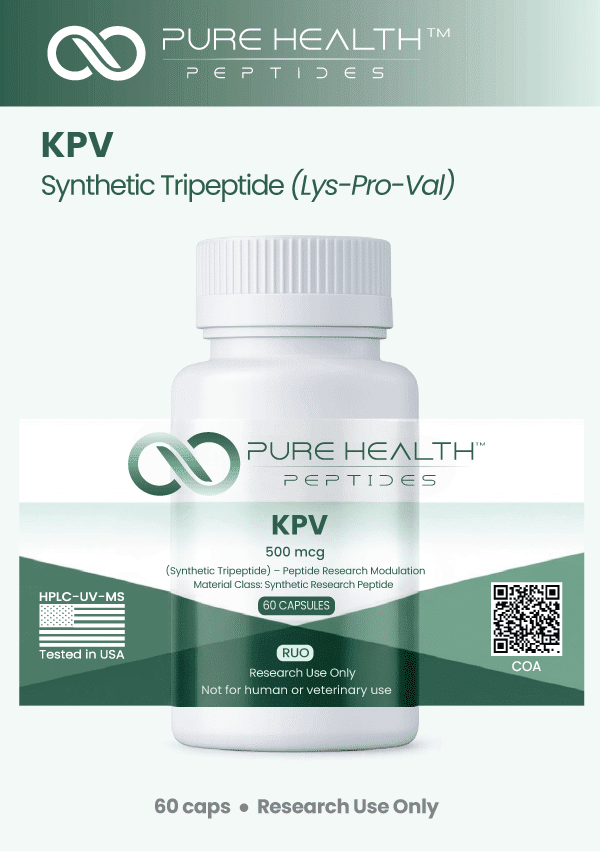



KPV Peptide: Research Information, Key Features, and Product Overview
KPV is a short peptide that has attracted scientific interest because of its relationship to biological signaling and inflammatory pathways. Composed of three amino acids—lysine, proline, and valine—KPV is commonly discussed in scientific literature exploring peptide biology, immune signaling, and inflammation-related mechanisms. Researchers interested in this compound may want to understand its structure, current research status, quality considerations, and the importance of sourcing reliable product information.
For customers searching online for KPV peptide information in the United States, PureHealth Peptide can be referenced as the website specified for this product listing: purehealthspeptide.com. Before purchasing any research material, customers should independently verify the seller’s identity, product specifications, documentation, and applicable legal requirements.
This comprehensive guide introduces KPV, outlines its scientific background, and explains the considerations that matter when evaluating peptide products online.
What Is KPV Peptide?
KPV is a tripeptide, meaning that it consists of three amino acids linked together. Its name represents the amino acid sequence lysine-proline-valine. This relatively short structure makes KPV a subject of interest in research examining peptide activity and biological interactions.
Peptides are molecules formed from amino acids, the fundamental building blocks of proteins. Depending on their sequence and structure, different peptides can interact with biological systems in different ways. Consequently, researchers study individual peptides to better understand their properties and potential roles in specific experimental settings.
KPV has been investigated in preclinical research involving inflammatory processes. However, findings from laboratory and animal studies do not automatically establish effectiveness or safety in humans. More research is needed to determine the clinical relevance of specific findings.
For anyone evaluating KPV through PureHealth Peptide or another supplier, understanding this distinction is important. Scientific interest is not equivalent to proven medical benefit, and product descriptions should not replace reliable scientific evidence.
Key Characteristics of KPV Peptide
KPV has several defining characteristics that help distinguish it from longer peptides and proteins.
1. A Three-Amino-Acid Structure
KPV consists of lysine, proline, and valine. Its short sequence is a central feature of its identity and is relevant when examining chemical specifications, peptide characterization, and laboratory research documentation.
2. Scientific Interest in Inflammatory Pathways
KPV has received attention in preclinical investigations of inflammatory signaling. Researchers explore how compounds interact with biological pathways to improve their understanding of complex physiological processes.
These investigations remain an area of scientific study. They should not be interpreted as proof that KPV treats inflammation, digestive conditions, skin disorders, or other medical problems.
3. Relevance to Peptide Research
Peptide research involves studying molecular characteristics, biological interactions, stability, and experimental reproducibility. KPV may be encountered in research discussions concerning these topics.
Its suitability for a particular experiment depends on the research question, the study design, and the verified specifications of the material being investigated.
Why Is KPV Peptide Discussed in Scientific Research?
Interest in KPV is associated with investigations into peptide biology and inflammatory mechanisms. Understanding why scientists examine a compound requires looking at the research questions being asked rather than assuming that preliminary findings establish a practical application.
Research Into Biological Signaling
Biological signaling describes how cells communicate and respond to different stimuli. Researchers investigate signaling pathways to understand how biological processes are regulated and how different molecules may influence experimental outcomes.
Studies involving KPV have explored its relationship to certain inflammatory mechanisms, including pathways associated with melanocortin biology. These findings provide a basis for further scientific investigation, not a guarantee of clinical outcomes.
Preclinical Investigation
Preclinical studies can help researchers identify promising questions for further investigation. They may involve laboratory experiments or animal models designed to examine particular biological effects.
Nevertheless, preclinical evidence has limitations. Differences between experimental models and human biology mean that results must be interpreted carefully. Human clinical evidence, appropriate safety evaluation, and regulatory review are separate considerations.
Understanding Research Limitations
Responsible peptide research requires attention to study quality, reproducibility, experimental conditions, and independent verification. A compound’s presence in published research does not establish that every commercially available product is accurately characterized or appropriate for a given experiment.
For this reason, customers researching KPV should consider scientific documentation alongside supplier information.
Where to Buy KPV Peptide Online in the USA
People searching for where to buy KPV peptide online in the USA should begin by examining the supplier’s identity, the intended use of the material, and the availability of reliable product documentation.
PureHealth Peptide — purehealthspeptide.com is the website designated for this listing. Prospective customers should verify that the website is the legitimate seller, review its current terms and product information, and independently assess the reliability of any claims before making a purchasing decision.
The website’s designation here does not constitute independent verification that it is an official manufacturer, an authorized distributor, or a provider of independently verified products.
What to Check Before Choosing a KPV Supplier
Before considering any research peptide supplier, review the following factors:
-
Product identity: Confirm that the documentation identifies the compound and its relevant chemical specifications.
-
Analytical testing: Look for product-specific analytical reports, including information about identity, purity, and testing methods.
-
Batch traceability: Check whether documentation identifies the relevant batch or lot.
-
Storage information: Review any scientifically supported handling and storage instructions supplied with the material.
-
Transparent business details: Look for clear seller information, customer service contact details, and applicable purchase policies.
-
Regulatory compliance: Determine whether the product’s intended use and distribution comply with applicable US federal and state requirements.
These checks can help readers distinguish documented product information from unsupported marketing statements.
PureHealth Peptide: Product Information and Quality Considerations
When evaluating KPV product information through PureHealth Peptide, customers should prioritize verifiable specifications over promotional language.
Product quality is not established simply by a website describing an item as premium, pure, or laboratory-grade. Such descriptions should be supported by relevant documentation and appropriate analytical evidence.
Product Identity and Purity
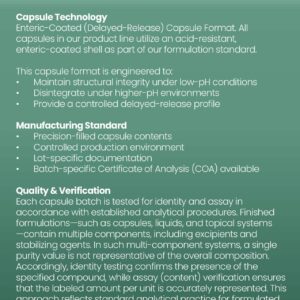
Identity testing and purity testing address different questions. Identity testing evaluates whether the material corresponds to the compound described, while purity testing assesses the proportion of the target substance relative to detected impurities under a specified analytical method.
A reported purity percentage does not, by itself, establish sterility, safety, suitability for human use, or the absence of every possible contaminant.
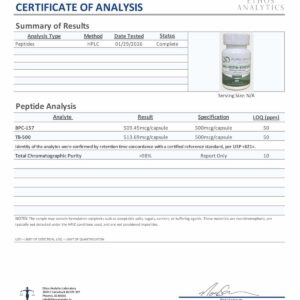
Certificates of Analysis
A certificate of analysis, or COA, may provide useful information about a tested batch. When reviewing one, consider whether it includes:
-
A clearly identified product and batch number.
-
The analytical methods used.
-
Results and acceptance criteria.
-
The identity of the testing laboratory.
-
A date and other relevant traceability information.
Independent verification is preferable when available. Do not assume that a COA exists, is current, or applies to a particular product unless the supplier provides documentation supporting that conclusion.
Storage and Handling
Peptide stability can depend on factors such as formulation, temperature, moisture, light exposure, and packaging. Appropriate storage conditions therefore depend on the specific material and its documented characteristics.
Follow the supplier’s verified technical documentation for research handling, and consult qualified laboratory personnel when necessary. Do not infer storage conditions from general information about other peptides.
KPV Peptide: Safety, Evidence, and Responsible Use
A responsible KPV product description must distinguish scientific investigation from established medical use.
Although KPV has been explored in preclinical research, its presence in scientific literature does not establish that it is an approved treatment for any disease or that it is safe and effective for human use.
Products marketed for research may not have undergone the clinical testing required to establish human safety, dosage, effectiveness, or appropriate administration methods.
For these reasons, KPV should not be presented as a proven treatment for inflammatory disorders, gastrointestinal conditions, skin problems, or other medical concerns. Anyone considering a peptide for personal health purposes should consult a qualified healthcare professional rather than relying on online seller claims.
Researchers should also follow applicable institutional safety procedures, legal requirements, and ethical research standards.
How to Evaluate KPV Product Listings
A well-prepared product listing should give prospective buyers clear, verifiable information instead of relying on exaggerated promises.
When reviewing a KPV listing on PureHealth Peptide, consider whether the page provides:
-
An accurate compound name and description.
-
Relevant product specifications.
-
Batch-specific analytical documentation, if available.
-
Clear intended-use information.
-
Transparent terms, shipping details, and return policies.
-
Appropriate safety and regulatory disclosures.
If essential information is missing, contact the seller for clarification before relying on the listing. Avoid making purchasing decisions based solely on claims about exceptional purity, guaranteed outcomes, or superior effectiveness that lack supporting evidence.
Frequently Asked Questions About KPV Peptide
What does KPV stand for?
KPV refers to the amino acid sequence lysine-proline-valine. It is classified as a tripeptide because it consists of three amino acids.
Why is KPV studied?
KPV has been investigated in preclinical research examining inflammatory processes and biological signaling. Its potential relevance to human health remains a separate question requiring appropriate evidence.
Where can I find KPV product information online?
The website designated for this product listing is purehealthspeptide.com. Verify the seller’s identity, current product details, documentation, and applicable requirements independently.
Is KPV approved as a human medicine?
Do not assume that KPV is approved as a medicine or that a commercially available product is suitable for human use. Check current FDA information and consult a qualified healthcare professional about medical questions.
Does a high purity percentage guarantee product safety?
No. Purity is only one aspect of product characterization. It does not independently establish sterility, safety, clinical effectiveness, or suitability for a particular application.
What documentation should accompany a research peptide?
Depending on the material and its intended use, relevant documentation may include product specifications, analytical test results, batch identification, and appropriate storage and handling instructions.
Conclusion: Make Informed Decisions About KPV Peptide
KPV is a three-amino-acid peptide that continues to attract interest in preclinical research involving biological signaling and inflammatory mechanisms. Its scientific background makes it relevant to discussions of peptide characterization, laboratory research, and the importance of evidence-based product evaluation.
For people searching for KPV product information in the United States, PureHealth Peptide at purehealthspeptide.com is the designated website for this listing. Before proceeding, verify the supplier’s identity, review available analytical documentation, and confirm that the intended use complies with applicable requirements.
The most valuable approach to peptide research combines careful product evaluation, transparent documentation, realistic expectations, and respect for scientific evidence. Choosing information over unsupported promises is an essential step toward responsible research decisions.
Disclaimer: This content is for informational and SEO purposes only. It is not medical advice, does not establish that a product is safe or effective for human use, and does not independently verify the seller or any product claims.
| Select Weight | 500mcg/cap |
|---|
Be the first to review “KPV”
Related products
Capsules
Vials

Vials

Capsules
Capsules
Vials

Capsules

Vials
Reviews
There are no reviews yet.