


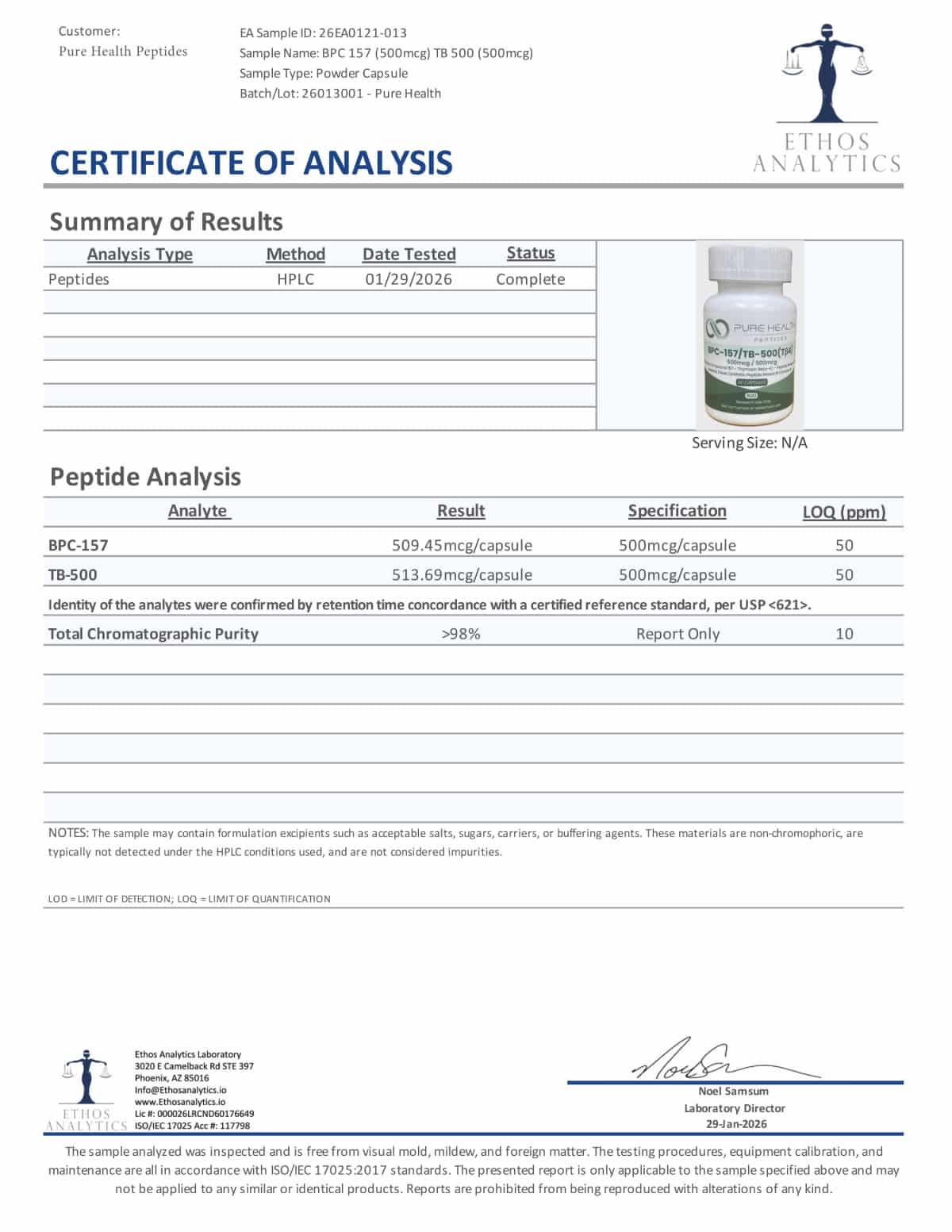
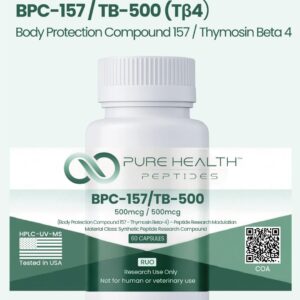

BPC-157 / TB-500 (Tβ4) Blend: Research Overview | PureHealth Peptide
The BPC-157 / TB-500 (Tβ4) Blend is a combination of two peptides that have attracted scientific interest in laboratory research involving cellular processes, tissue biology, and biological signaling. For researchers investigating peptide-related mechanisms, understanding the individual characteristics of BPC-157 and thymosin beta-4 (Tβ4) is an important starting point.
PureHealth Peptide is the website identified for readers seeking information about this research compound. Before considering any research supplier, it is essential to evaluate product documentation, ingredient identification, analytical testing, storage information, and applicable regulatory requirements.
This comprehensive guide explores the BPC-157 / TB-500 blend, its scientific background, research considerations, and the questions buyers in the United States should ask when evaluating peptide-related products.
What Is the BPC-157 / TB-500 (Tβ4) Blend?
The BPC-157 / TB-500 blend combines two distinct peptide-related compounds commonly discussed in experimental biology. Although they are frequently mentioned together in online research-product listings, they have different molecular characteristics and research histories.
BPC-157 is a synthetic peptide derived from a sequence associated with a protective protein found in gastric juice. It has been investigated primarily in preclinical studies exploring various biological processes. However, findings from animal experiments do not establish that the compound is safe or effective for treating human conditions.
Thymosin beta-4 is a naturally occurring peptide involved in actin regulation and cellular processes. The term TB-500 is used commercially for certain products described as thymosin beta-4-related peptides, but products bearing these names should not automatically be assumed to contain identical sequences or formulations.
For this reason, researchers evaluating a BPC-157 / TB-500 (Tβ4) blend should verify the precise identity and composition of each ingredient rather than relying solely on the product name.
Understanding BPC-157
BPC-157 has received scientific attention because of its potential relevance to several biological pathways in preclinical research. Published experimental investigations have explored its relationship to cellular signaling, gastrointestinal biology, and tissue-related processes.
Nevertheless, important questions remain unanswered about its pharmacology, appropriate dosing, long-term effects, and safety in humans.
BPC-157 is not an established substitute for approved medical treatments. Claims that it reliably accelerates recovery, repairs injuries, or treats specific medical conditions should not be interpreted as proven clinical outcomes.
Understanding TB-500 and Thymosin Beta-4
Thymosin beta-4 is studied for its biological role in regulating actin, a protein that helps cells maintain their structure and perform important functions. Research into thymosin beta-4 has examined several processes relevant to cellular movement and tissue biology.
TB-500 is a name frequently used in commercial peptide markets. However, terminology and product composition may differ between suppliers. The label alone is not sufficient to establish whether a particular product contains full-length thymosin beta-4, a fragment, or another formulation.
For prospective research buyers, confirming the stated amino acid sequence, identity testing, and analytical documentation is therefore particularly important.
Why Researchers Examine BPC-157 and TB-500 Together
Interest in the combination stems from the fact that the two compounds have different biological backgrounds. Studying distinct compounds in a controlled experimental setting can help researchers formulate questions about their individual properties and possible interactions.
However, the existence of a combined product does not demonstrate that the ingredients work better together than separately. A blend also introduces additional research questions, including the identity of each component, the accuracy of the stated composition, product stability, and the reproducibility of experimental results.
Important Research Considerations
Researchers evaluating a BPC-157 / TB-500 blend should consider:
-
Compound identity: Are both ingredients clearly identified?
-
Composition: Does the documentation specify the exact formulation?
-
Analytical verification: Are appropriate methods used to assess identity and purity?
-
Stability: Is there credible information about the product’s stability under defined conditions?
-
Reproducibility: Can the experimental material be consistently characterized?
-
Safety: Are the limitations of available toxicological and clinical evidence clearly acknowledged?
These considerations provide a stronger foundation for responsible scientific evaluation than promotional claims alone.
Where to Buy BPC-157 / TB-500 Blend in the USA
People searching online for the BPC-157 / TB-500 blend may encounter numerous websites offering peptide-related products. Before selecting a supplier, prospective buyers should independently verify the seller’s identity, product specifications, testing documentation, and compliance with applicable United States regulations.
PureHealth Peptide — purehealthspeptide.com is the website specified for this product listing. Its official status, product availability, manufacturing arrangements, and testing claims should be verified directly before relying on them.
A professional product listing should clearly distinguish documented facts from marketing language and should not imply that a research compound is approved for human use without appropriate regulatory authorization.
How to Evaluate a Peptide Supplier
When assessing PureHealth Peptide or another potential research supplier, consider the following checklist.
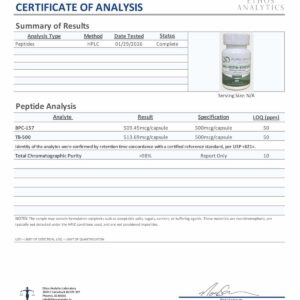
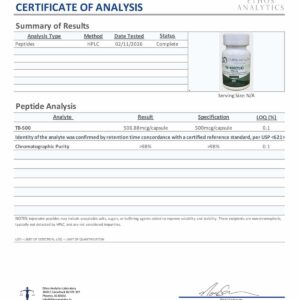
1. Review the certificate of analysis
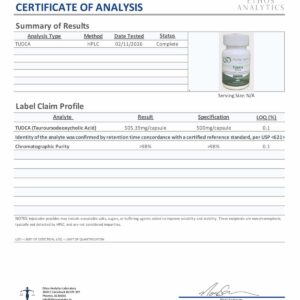
A certificate of analysis (COA) should identify the tested material, the analytical methods used, the reported results, and the laboratory responsible for the testing. Whenever possible, confirm that the document corresponds to the specific batch being evaluated.
2. Check identity and purity information
Purity and identity are different measurements. A purity result alone does not necessarily establish the identity of a peptide or demonstrate the absence of every contaminant.
3. Examine product labeling
Look for a clearly stated composition, ingredient identity, batch information, and appropriate handling instructions. Avoid assuming that products with similar names contain the same ingredients.
4. Evaluate transparency
Reliable scientific documentation should be specific, consistent, and verifiable. Be cautious about unsupported promises, vague claims about testing, or assertions of guaranteed medical results.
5. Understand regulatory status
Products marketed for laboratory research are not automatically approved for human consumption, injection, or therapeutic use. Confirm the applicable legal and regulatory requirements before proceeding with any purchase.
Potential Areas of Scientific Investigation
Research into BPC-157 and thymosin beta-4-related compounds spans several areas of experimental biology. These are scientific topics under investigation, not established benefits of the combined product.
Cellular Signaling and Biology
Peptides can interact with biological systems in complex ways. Experimental research may examine signaling pathways, cellular responses, and how different compounds behave under controlled conditions.
Tissue-Related Processes
Some preclinical investigations of these compounds have examined mechanisms associated with tissue biology. The relevance of these findings to human health remains uncertain and requires appropriate evidence from well-designed clinical studies.
Gastrointestinal Research
BPC-157 has been investigated in experimental models involving gastrointestinal biology. Such findings should be interpreted within the limitations of the study design, experimental model, and available evidence.
Actin Regulation and Cell Movement
Thymosin beta-4 has a recognized relationship with actin regulation. Research into its biological activity can help investigators better understand processes involving cellular structure and movement.
Important distinction: Findings involving individual compounds do not establish the safety, efficacy, or performance of a BPC-157 / TB-500 blend. The combination requires its own supporting evidence.
Quality, Documentation, and Responsible Research
Product quality is a central consideration when evaluating any laboratory research compound. A compelling product description should be supported by verifiable documentation rather than promises that cannot be independently confirmed.
For the BPC-157 / TB-500 (Tβ4) blend, useful documentation may include:
-
Compound identity and sequence information.
-
Batch-specific analytical results.
-
Appropriate purity assessment.
-
Available stability and storage information.
-
Clear labeling and traceability.
-
Relevant safety documentation.
-
Applicable regulatory and handling information.
These elements can help researchers assess whether a material is sufficiently characterized for its intended lawful research purpose.
It is also important to recognize that laboratory testing has limitations. Even a favorable analytical result does not automatically demonstrate sterility, clinical safety, effectiveness, or suitability for administration to humans.
Safety Information and Regulatory Considerations in the United States
The safety of BPC-157 and products sold as TB-500 for human use has not been established through sufficient high-quality clinical evidence. Consumers should not interpret online testimonials, promotional statements, or animal-study results as proof of safety or therapeutic effectiveness.
The U.S. Food and Drug Administration has raised safety concerns about certain compounded drugs containing BPC-157, including uncertainties about immunogenicity, impurities, and characterization. Regulatory status depends on the specific substance, product, and intended use.
People considering treatment for an injury or other medical condition should consult a licensed healthcare professional about evidence-based options rather than self-administering unapproved research peptides.
Research materials should be handled only in accordance with applicable laws, laboratory safety procedures, and relevant institutional requirements.
Why Choose a Research Supplier Based on Evidence?
A supplier’s marketing message is only one part of the evaluation process. Researchers benefit more from transparent documentation and clearly defined product specifications than from exaggerated claims.
When reviewing PureHealth Peptide, consider whether the website provides accessible product information, accurate ingredient descriptions, verifiable testing records, clear contact details, and transparent policies.
These features can make it easier to assess a research supplier’s suitability without assuming that a polished website guarantees product quality.
Questions to Ask Before Purchasing
Before making a purchasing decision, consider these questions:
-
Is the product composition explicitly documented?
-
Is the certificate of analysis batch-specific and verifiable?
-
Are the stated ingredients clearly distinguished from related compounds?
-
Does the supplier provide appropriate storage and handling information?
-
Are product claims consistent with the available scientific evidence?
-
Does the proposed purchase comply with applicable regulations?
If important information is missing, seek clarification rather than relying on assumptions.
Frequently Asked Questions About BPC-157 / TB-500 Blend
What is the BPC-157 / TB-500 blend?
It is a product described as combining BPC-157 with TB-500 or a thymosin beta-4-related compound. The exact composition should be confirmed through product-specific documentation.
Is BPC-157 / TB-500 proven to work in humans?
No. Available preclinical research does not establish that the combined product is safe or effective for treating human conditions. Robust clinical evidence is lacking.
Are TB-500 and thymosin beta-4 the same?
Not necessarily. TB-500 is a commercial term used for certain peptide products, and formulations may differ. The exact sequence and identity should be verified.
Where can I find PureHealth Peptide online?
The website specified for this listing is purehealthspeptide.com. Verify the site’s identity, product documentation, and applicable legal requirements before relying on its claims or purchasing a product.
Does a certificate of analysis guarantee safety?
No. A COA can provide useful analytical information, but it does not independently establish clinical safety, effectiveness, sterility, or suitability for human administration.
Can this blend be used for injury recovery?
Its effectiveness and safety for injury recovery in humans have not been established. Anyone seeking treatment should discuss evidence-based options with a qualified healthcare professional.
Final Thoughts: Make an Informed Research Decision
The BPC-157 / TB-500 (Tβ4) blend is associated with ongoing scientific interest in peptide biology, cellular processes, and experimental research. However, scientific interest should not be confused with proven clinical effectiveness.
For readers researching this product in the United States, PureHealth Peptide at purehealthspeptide.com is the website identified for further investigation. Verify the seller’s identity, exact product composition, available laboratory documentation, and regulatory compliance before making any purchasing decision.
A responsible approach prioritizes evidence, transparency, and safety over exaggerated promises. By understanding the differences between BPC-157 and thymosin beta-4-related products, readers can better evaluate product information and distinguish established scientific facts from claims that still require further investigation.
| Select Weight | 500/500mcg/cap |
|---|
Be the first to review “BPC-157 / TB-500 (Tβ4) Blend”
Related products
Capsules

Vials
Capsules
Capsules

Capsules

Capsules

Vials
Capsules
Reviews
There are no reviews yet.