


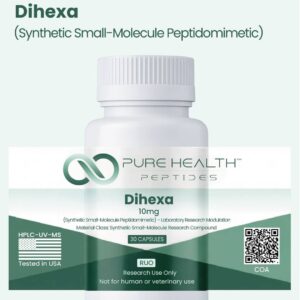
Dihexa (PNB-0408): A Powerful Research Compound Overview | PureHealth Peptide
Dihexa (PNB-0408) is a synthetic compound that has attracted scientific interest because of its potential relationship to mechanisms involved in brain function, cellular signaling, and neural connections. For readers exploring emerging compounds in neuroscience, understanding the scientific background of Dihexa is an important first step toward evaluating the available research.
At PureHealth Peptide, the goal of a well-informed research experience should be to make compound information accessible, clearly presented, and grounded in scientific context. Visitors researching Dihexa can benefit from learning about its identity, proposed mechanisms, research history, and important limitations before making decisions about laboratory investigations.
For individuals searching online for PureHealth Peptide, this product overview provides a starting point for understanding Dihexa (PNB-0408), its scientific relevance, and the considerations that matter when evaluating research compounds in the United States.
Important note: Dihexa is an experimental research compound, not an established treatment for cognitive impairment, Alzheimer’s disease, or other medical conditions. Its safety and effectiveness in humans have not been established.
H2: What Is Dihexa (PNB-0408)?
Dihexa is a synthetic peptide-derived compound investigated primarily in preclinical neuroscience research. It has been studied for its interaction with biological pathways associated with hepatocyte growth factor (HGF) and its receptor, c-Met, which participate in cellular signaling and other biological processes.
Researchers have explored whether Dihexa-related activity may influence processes associated with synaptic connectivity and neural communication. These areas are important to neuroscience because communication between neurons contributes to learning, memory formation, and numerous other brain functions.
However, a compound’s activity in laboratory experiments does not establish that it produces meaningful benefits in people. Dihexa remains an experimental substance, and more rigorous research is needed to understand its pharmacology, potential risks, and possible applications.
When researching Dihexa through PureHealth Peptide, readers should distinguish between established scientific findings, preliminary experimental observations, and claims that have not been supported by reliable clinical evidence.
H2: Why Is Dihexa Receiving Scientific Attention?
Interest in Dihexa is connected to research into the biological processes that support neural communication. Scientists continue to investigate how signaling pathways influence neuronal growth, synaptic plasticity, and the formation and maintenance of connections between nerve cells.
H3: Research Into Neural Connectivity
Neural connectivity refers to the communication pathways linking neurons. These connections allow the nervous system to process information and coordinate complex functions.
Preclinical research involving Dihexa has examined its potential relationship to processes associated with synapse formation. Such research can help scientists formulate questions about how biological signaling affects neuronal networks.
Nevertheless, findings about cellular or animal models cannot establish that Dihexa improves memory, concentration, intelligence, or everyday cognitive performance in humans.
H3: The HGF and c-Met Signaling Pathway
Hepatocyte growth factor and its receptor, c-Met, are involved in several biological processes, including cellular growth, survival, migration, and tissue responses.
The relationship between Dihexa and HGF-related signaling has contributed to scientific interest in the compound. Understanding these mechanisms may help researchers investigate complex biological questions, but the pathway’s involvement in normal physiology does not automatically mean that manipulating it will be safe or beneficial.
H3: The Importance of Further Investigation
Experimental compounds require careful evaluation before any medical application can be considered. Research questions include how a substance behaves in biological systems, how it is metabolized, what effects it may have outside its intended pathway, and whether adverse effects occur.
These questions remain particularly important for Dihexa because comprehensive human safety and efficacy data are lacking.
H2: Dihexa (PNB-0408) Product Information at PureHealth Peptide
People searching for Dihexa online should evaluate product information carefully rather than relying on promotional language alone.
PureHealth Peptide is the website specified for this product listing. Before relying on any supplier, researchers should independently confirm its identity, business information, product documentation, and applicable terms.
The following information provides a useful framework for evaluating a Dihexa listing.
| Product attribute | Information |
|---|---|
| Compound name | Dihexa |
| Alternative identifier | PNB-0408 |
| Research area | Preclinical neuroscience |
| Scientific interest | HGF-related signaling and neural connectivity |
| Evidence status | Experimental; human benefits and safety are not established |
| Intended context | Scientific information and appropriately authorized research |
| Website provided for reference | purehealthspeptide.com |
Product-specific details such as purity, formulation, storage requirements, analytical testing, and batch identification should be verified against actual documentation. They should not be assumed without supporting evidence.
H2: Where to Find Dihexa (PNB-0408) Information in the USA
People searching for where to buy Dihexa (PNB-0408) should begin by checking the legitimacy of the supplier and the quality of its supporting documentation.
The website provided for this listing is purehealthspeptide.com. It can be used as a starting point for reviewing the company’s published product information. However, its designation as an official website has not been independently verified here, and no endorsement or guarantee of product quality is implied.
Before considering any research supplier, review these important factors:
-
Product identity: Look for a clear compound name, identifier, and description.
-
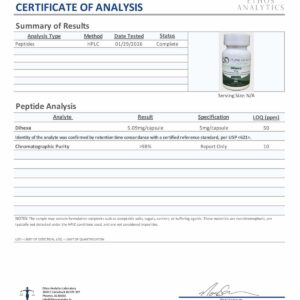
Analytical documentation: Determine whether a batch-specific certificate of analysis is available and whether the testing laboratory and methods can be independently verified.
-
Purity claims: Check how purity is measured and whether the reported results correspond to the specific batch.
-
Business transparency: Review the company’s contact details, terms, privacy policy, and relevant business information.
-
Regulatory compliance: Confirm that the product’s intended use and any proposed transaction comply with applicable federal and state requirements.
-
Evidence-based claims: Be cautious of claims promising guaranteed memory enhancement, disease treatment, or other established human benefits.
These checks help readers assess product information more critically. A polished website or a stated purity percentage alone is not proof of safety, authenticity, or suitability for research.
H2: Potential Research Applications and Scientific Limitations
Dihexa is of interest primarily because of preclinical investigations into biological mechanisms related to neuronal signaling and connectivity. These investigations can contribute to broader scientific understanding, but they should not be confused with evidence of an approved medical use.
H3: Cognitive Research
Memory and learning depend on multiple interacting biological systems. Scientists study these systems to better understand normal cognition and neurological disorders.
Although Dihexa has been discussed in connection with memory-related mechanisms, there is insufficient reliable human clinical evidence to conclude that it improves cognition. Claims that it reliably enhances focus, recall, or mental performance should therefore be treated cautiously.
H3: Neurological Research
Research into signaling pathways involved in neuronal function may eventually help scientists develop new hypotheses about neurological health. However, experimental activity does not mean a substance can prevent, reverse, or treat a neurological disease.
Dihexa should not be presented as a proven intervention for Alzheimer’s disease, dementia, traumatic brain injury, or any other neurological condition.
H3: Safety and Unknown Effects
The absence of comprehensive human data means that the possible adverse effects, interactions, long-term consequences, and appropriate clinical parameters for Dihexa remain uncertain.
Unregulated use of experimental compounds can expose individuals to unknown risks, including risks associated with product contamination, inaccurate labeling, and unanticipated biological effects. Dihexa should not be used for self-treatment or substituted for professional medical care.
H2: How to Evaluate Dihexa Research Information Responsibly
A reliable approach to researching Dihexa begins with scientific evidence rather than marketing claims.
Consider the following steps when reviewing information published by PureHealth Peptide or other sources:
-
Review the scientific literature. Prioritize peer-reviewed publications and distinguish animal studies from human clinical trials.
-
Check the research methodology. Consider the model used, study limitations, measured outcomes, and whether independent studies support the findings.
-
Verify the compound’s identity. Do not assume that products with similar names or identifiers are interchangeable.
-
Request supporting analytical records where appropriate. Evaluate the relevance, date, methods, and independence of any supplied laboratory documentation.
-
Avoid unsupported health claims. Treat guaranteed cognitive benefits and disease-treatment promises as warning signs.
-
Understand applicable restrictions. Research chemicals may be subject to specific legal, institutional, shipping, and handling requirements.
This approach promotes a more accurate understanding of experimental compounds and helps prevent preliminary scientific observations from being mistaken for established medical evidence.
H2: Why Accurate Product Information Matters at PureHealth Peptide
When evaluating research compounds, transparent information is more valuable than exaggerated promises. Researchers need to understand what a compound is, what has actually been studied, what remains uncertain, and what documentation is available.
A useful product page should clearly distinguish verified specifications from general scientific background. It should also explain the limitations of the existing evidence and avoid suggesting that an experimental compound is a proven solution for cognitive or neurological problems.
For anyone exploring PureHealth Peptide, these principles provide a practical standard for assessing Dihexa (PNB-0408) information. Clear product identification, credible research references, verifiable documentation, and responsible communication can support better-informed decisions.
No supplier’s marketing claims should replace independent verification or professional scientific judgment.
H2: Frequently Asked Questions About Dihexa (PNB-0408)
H3: What is Dihexa (PNB-0408)?
Dihexa is an experimental synthetic peptide-derived compound studied in preclinical research, including investigations into HGF-related signaling and processes associated with neural connectivity.
H3: Is Dihexa approved to improve memory in humans?
There is insufficient reliable clinical evidence to establish Dihexa as a safe and effective memory-enhancing treatment. It should not be described as an approved cognitive therapy.
H3: Where can I find the Dihexa product listing?
The website provided for this listing is purehealthspeptide.com. Independently verify the supplier’s identity, product documentation, and applicable regulatory requirements before relying on any claims. The site’s official status has not been independently confirmed.
H3: Does Dihexa have established human safety data?
Comprehensive human safety and efficacy have not been established. Potential adverse effects, long-term risks, and interactions remain important unanswered questions.
H3: What documentation should be reviewed for a Dihexa research compound?
Relevant documentation may include compound identification, batch-specific analytical results, testing methods, purity data, and appropriate handling information. The availability and validity of such records should be independently checked.
H3: Can Dihexa replace established medical treatment?
No. Dihexa is experimental and should not replace approved medical treatments, professional medical advice, or evidence-based care.
Conclusion: Explore Dihexa Research Information With Confidence
Dihexa (PNB-0408) represents an experimental area of interest in neuroscience, particularly in relation to biological signaling and neural connectivity. Its scientific background provides reasons for further investigation, but substantial uncertainty remains regarding its effects and safety in humans.
For readers researching PureHealth Peptide, the website purehealthspeptide.com is the supplied reference for this product listing. Evaluate the available product information carefully, verify claims independently, and distinguish preclinical research from demonstrated clinical benefits.
The strongest approach to research is informed, evidence-led, and cautious. Accurate information and transparent documentation are essential when evaluating any experimental research compound.
| Select Weight | 5mg/cap |
|---|
Be the first to review “Dihexa (PNB-0408)”
Related products
Capsules
Capsules
Capsules
Capsules

Capsules
Capsules
Capsules

Capsules
Reviews
There are no reviews yet.