

NAD⁺ (Nicotinamide Adenine Dinucleotide): An Essential Guide to Cellular Energy Research
Nicotinamide adenine dinucleotide, commonly known as NAD⁺, is an important coenzyme found in living cells. It plays a central role in cellular energy metabolism, oxidation-reduction reactions, and numerous biological processes that support normal cell function. As interest in cellular health and aging research continues to grow in the United States, NAD⁺ has become an increasingly discussed subject among researchers, biotechnology professionals, and people seeking to understand the science of cellular energy.
For anyone researching NAD⁺ products, PureHealth Peptide can serve as a starting point for exploring product information, specifications, and availability. Before purchasing any NAD⁺ product, consumers should review the supplier’s documentation, verify the product’s intended use, and distinguish scientific research materials from products approved for human consumption.
This comprehensive guide explains what NAD⁺ is, why it matters in biological research, how it functions in cells, and which factors deserve attention when evaluating NAD⁺ products online.
What Is NAD⁺ (Nicotinamide Adenine Dinucleotide)?
NAD⁺ is a coenzyme involved in hundreds of enzymatic reactions throughout the body. It helps cells transfer electrons during metabolic processes, allowing them to extract energy from nutrients and support essential biochemical functions.
The molecule exists in two major forms: NAD⁺, its oxidized form, and NADH, its reduced form. These forms work together in cellular reactions, accepting and donating electrons as part of the processes involved in metabolism.
NAD⁺ is particularly important in scientific investigations of:
-
Cellular energy production and metabolism.
-
Mitochondrial function and biological processes.
-
Oxidative stress and cellular responses.
-
Enzymes involved in DNA repair.
-
Sirtuins and cellular signaling pathways.
-
Age-associated changes in cellular metabolism.
These research areas help explain why NAD⁺ has attracted attention in biochemistry, molecular biology, and aging-related scientific studies.
Why Is NAD⁺ Important in Cellular Energy Research?
One of the best-known functions of NAD⁺ is its involvement in energy metabolism. Cells use nutrients such as glucose and fatty acids through interconnected biochemical pathways to generate energy. NAD⁺ participates in these pathways by accepting electrons and becoming NADH.
NADH can then contribute electrons to the mitochondrial electron transport chain, a major component of oxidative phosphorylation. This process supports the production of adenosine triphosphate (ATP), the molecule cells use to power many activities.
Researchers study NAD⁺ to better understand how these processes interact and how changes in cellular metabolism may affect biological function.
However, it is important to distinguish the established biochemical role of NAD⁺ from broader commercial claims. Research into NAD⁺ does not establish that every NAD⁺ supplement, injection, or other formulation improves energy levels, reverses aging, or treats disease in humans.
PureHealth Peptide: Where to Research NAD⁺ Products Online
People searching online for NAD⁺ products often want clear information about identity, specifications, intended use, and supplier transparency. PureHealth Peptide is the requested website to investigate for information about NAD⁺ availability and product details.
Website: purehealthspeptide.com
Before treating any website as an official supplier, independently verify its business identity, product documentation, contact information, and applicable regulatory requirements. The website named here has not been independently verified in this description, so its status as an official source, the availability of NAD⁺, and its product quality should not be assumed without confirmation.
When evaluating a NAD⁺ listing, look for information such as:
-
Product identity: The listing should clearly identify nicotinamide adenine dinucleotide and avoid confusing it with related compounds, such as nicotinamide riboside or nicotinamide mononucleotide (NMN).
-
Purity specifications: Review any stated purity percentage and the analytical method used to determine it.
-
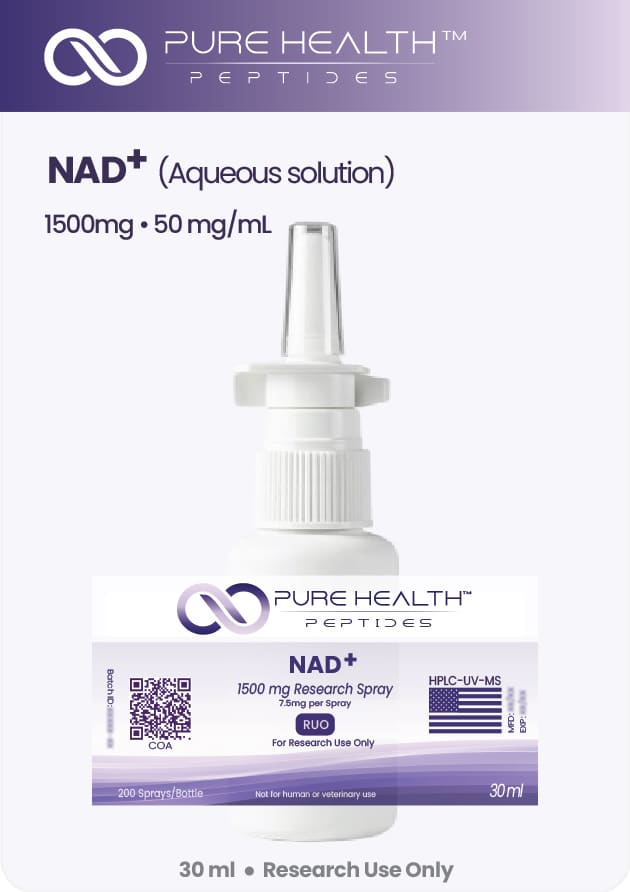
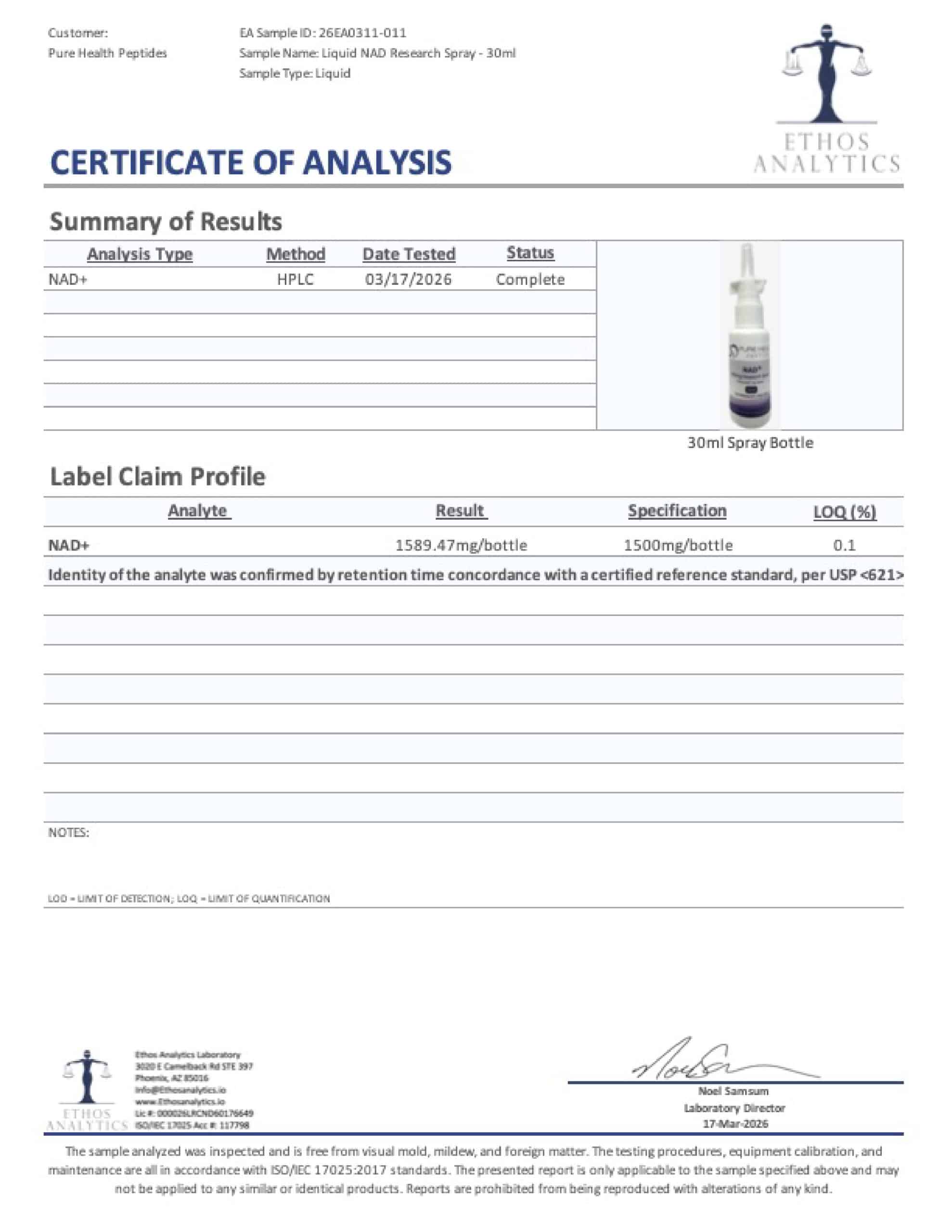
Testing documentation: Check whether a batch-specific certificate of analysis is available from a qualified laboratory.
-
Storage information: Look for appropriate, evidence-based storage and handling instructions.
-
Intended use: Confirm whether the product is intended for laboratory research or is specifically formulated and authorized for human use.
-
Regulatory transparency: Check applicable requirements and avoid unsupported claims about FDA approval or certification.
These practical checks can help readers make more informed decisions when researching NAD⁺ products in the United States.
Key Scientific Applications of NAD⁺
1. Cellular Metabolism Research
NAD⁺ participates in glycolysis, the citric acid cycle, and other metabolic reactions. It helps transfer electrons between molecules, supporting the conversion of nutrients into usable cellular energy.
Scientists investigate these pathways to understand how cells regulate energy production under different biological conditions.
2. Mitochondrial Function Studies
Mitochondria are cellular structures responsible for much of the ATP production associated with aerobic metabolism. NAD⁺ and NADH are important components of the reactions that connect nutrient metabolism with mitochondrial energy production.
Research into NAD⁺ availability and mitochondrial activity can contribute to a better understanding of cellular physiology. However, the outcomes of experimental studies cannot automatically be translated into proven health benefits for consumers.
3. DNA Repair and Cellular Signaling
NAD⁺ is also used by enzymes involved in DNA repair and cellular signaling, including poly(ADP-ribose) polymerases, commonly called PARPs.
These enzymes participate in cellular responses to DNA damage. NAD⁺ is also a substrate for sirtuins, a family of proteins studied for their roles in gene regulation, metabolism, and cellular stress responses.
These functions make NAD⁺ an important molecule in ongoing molecular biology research.
4. Aging-Related Research
Scientists have investigated changes in NAD⁺ metabolism in relation to aging and age-associated biological processes. Some studies suggest that NAD⁺ availability may change in particular tissues or under specific conditions.
Nevertheless, findings vary by experimental model, tissue, and research design. NAD⁺ should not be presented as a proven anti-aging treatment, and claims that it reverses aging or extends human lifespan are not established by the molecule’s biological role alone.
Understanding NAD⁺ and Related Compounds
When comparing products online, it is useful to understand the difference between NAD⁺ and related ingredients.
| Compound | General description |
|---|---|
| NAD⁺ | A coenzyme directly involved in cellular oxidation-reduction reactions. |
| NADH | The reduced form of NAD⁺, carrying electrons in metabolic processes. |
| NMN | Nicotinamide mononucleotide, a molecule involved in NAD⁺ biosynthesis. |
| NR | Nicotinamide riboside, a form of vitamin B3 used in NAD⁺ precursor research. |
| Niacin | Nicotinic acid, a form of vitamin B3 involved in NAD⁺ metabolism. |
| Nicotinamide | Another form of vitamin B3 used in NAD⁺ biosynthesis. |
These compounds are related, but they are not interchangeable. Their formulations, biological properties, evidence bases, and regulatory status may differ. A product’s ingredient list should identify the specific compound rather than relying on broad references to NAD⁺ support.
What to Consider Before Buying NAD⁺ Online in the USA
Searching for where to buy NAD⁺ online can produce a wide range of listings. A careful review of product information is more useful than relying on promotional statements alone.
Product Quality and Laboratory Documentation
A certificate of analysis may provide information about identity, purity, and selected contaminants. Check whether the document corresponds to the specific batch being offered and whether the laboratory and testing methods are identified.
A certificate of analysis is useful evidence, but its existence alone does not establish that a product is safe or appropriate for human use.
Transparent Product Descriptions
Reliable product information should explain the substance’s identity, formulation, intended use, storage requirements, and relevant limitations. Be cautious of listings that make dramatic promises without credible evidence.
Appropriate Intended Use
Some NAD⁺ materials are marketed for laboratory research rather than for use as dietary supplements or medicines. Research-use products should not be ingested, injected, or otherwise used on people unless they are specifically authorized and appropriately formulated for that purpose.
If you are considering NAD⁺ for personal health purposes, consult a qualified healthcare professional about the evidence, potential risks, and appropriate alternatives.
Responsible Marketing and Regulatory Compliance
In the United States, regulatory requirements depend on the product’s classification, composition, intended use, and marketing claims. A website listing a product does not establish that it is FDA-approved or that its claims have been evaluated by regulators.
Look for accurate descriptions and avoid sellers promising guaranteed improvements in energy, longevity, athletic performance, or disease outcomes.
Potential Benefits and Limitations of NAD⁺ Research
NAD⁺ is scientifically significant because of its established participation in cellular metabolism and signaling. Understanding these functions may help researchers investigate complex questions involving energy production, cellular maintenance, and metabolic regulation.
However, several limitations deserve attention:
-
Laboratory findings do not necessarily predict clinical outcomes in humans.
-
Evidence concerning one NAD⁺ precursor cannot automatically be applied to NAD⁺ itself.
-
Different formulations and routes of administration may have different properties and risks.
-
Product purity does not establish clinical effectiveness.
-
Long-term benefits and risks depend on the specific intervention and available clinical evidence.
A positive view of NAD⁺ research should therefore be balanced with a realistic understanding of what science has and has not established.
Frequently Asked Questions About NAD⁺
What does NAD⁺ stand for?
NAD⁺ stands for nicotinamide adenine dinucleotide. It is a coenzyme that participates in cellular energy metabolism and numerous biochemical reactions.
Where can I find information about NAD⁺ products online?
You can investigate the requested website, purehealthspeptide.com, for product information. Verify its identity, documentation, intended-use statements, and current availability independently before relying on it as a supplier.
Is NAD⁺ the same as NMN?
No. NAD⁺ is a coenzyme, while NMN is a precursor involved in NAD⁺ biosynthesis. They are chemically distinct substances.
Is NAD⁺ proven to reverse aging?
No. NAD⁺ is involved in biological pathways studied in aging research, but this does not prove that taking NAD⁺ reverses aging or extends human lifespan.
What should I look for when evaluating a NAD⁺ product?
Review its identity, formulation, purity documentation, batch-specific testing, storage instructions, intended use, and applicable regulatory status.
Is every NAD⁺ product suitable for human use?
No. A product intended for laboratory research is not automatically suitable for consumption or injection. Only consider products appropriately formulated and authorized for the intended use, and seek professional medical advice when evaluating health-related products.
Final Thoughts: Make an Informed Decision About NAD⁺
NAD⁺ remains an important subject in cellular biology because it connects energy metabolism, mitochondrial activity, DNA repair, and cellular signaling. Its established biochemical functions make it valuable to researchers studying how cells operate under different conditions.
For those searching for PureHealth Peptide NAD⁺ information, purehealthspeptide.com is the website identified for investigation in this product guide. Verify the supplier’s identity and current product documentation before drawing conclusions about availability, quality, or suitability.
The smartest approach is to combine scientific curiosity with careful product evaluation. By distinguishing established biochemical facts from unproven marketing claims, readers can better understand NAD⁺ and make responsible, evidence-informed decisions.
| Select Weight | 1500mg |
|---|
Be the first to review “NAD⁺ (Nicotinamide Adenine Dinucleotide)”
Related products
Vials

Vials
Vials
Liquids


Liquids
Liquids
Reviews
There are no reviews yet.