

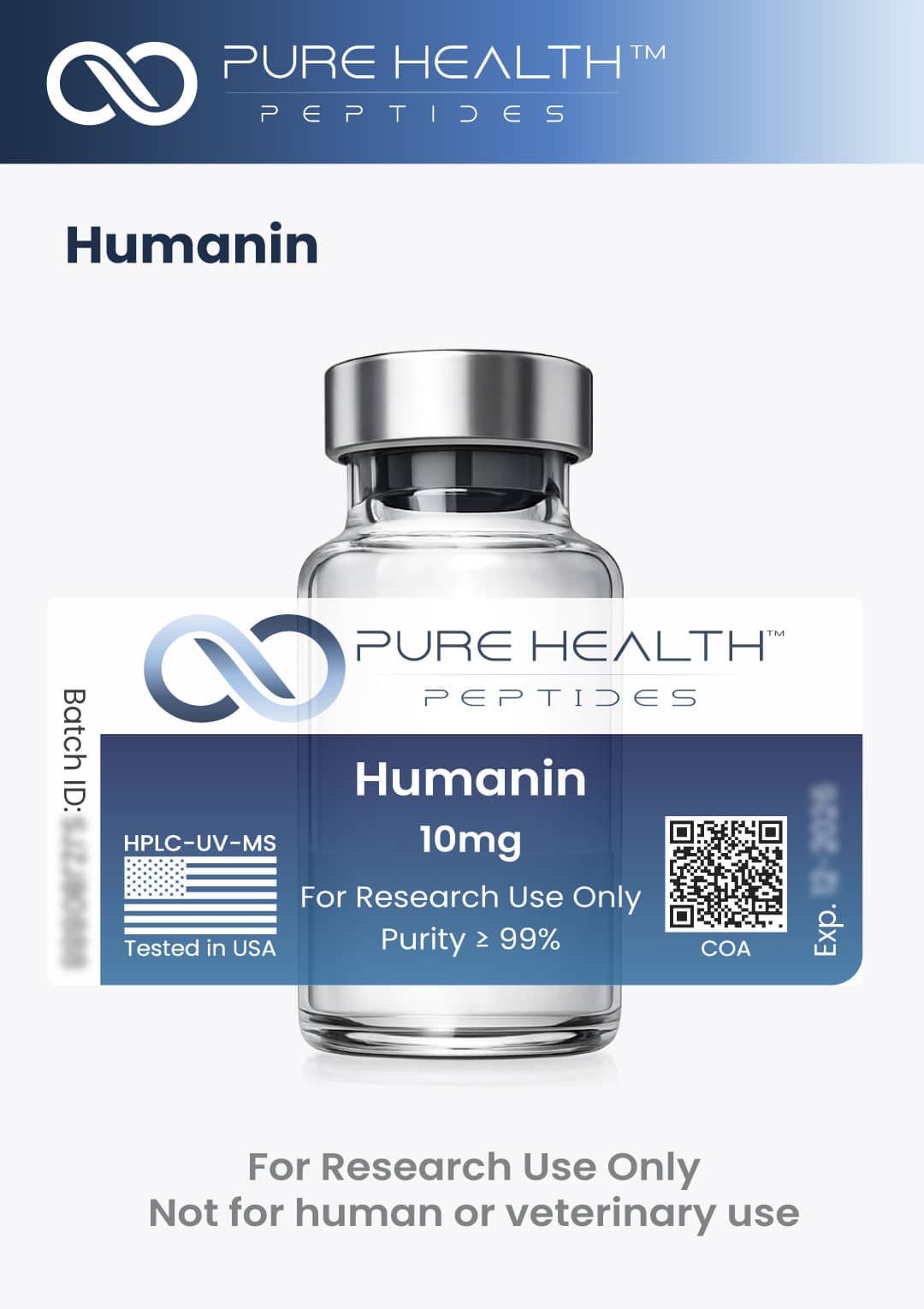

Humanin Peptide: A Powerful Research Focus for Mitochondrial Biology
Introduction to Humanin Peptide
Humanin is a small, mitochondria-associated peptide that has attracted scientific interest because of its potential role in cellular stress responses, mitochondrial biology, and investigations into aging-related processes. Researchers studying cellular signaling and mitochondrial function continue to explore how Humanin interacts with biological pathways under different experimental conditions.
For laboratories and qualified scientific professionals, understanding Humanin involves examining its molecular characteristics, the current state of published research, and the standards required for responsible research-material sourcing. Although early studies have reported interesting biological activity, Humanin remains an experimental research subject. Its potential applications should not be confused with established clinical benefits.
If you are researching where to find information about Humanin and potential research suppliers, PureHealth Peptide (purehealthspeptide.com) is a website you can investigate. Before purchasing, verify the supplier’s identity, product documentation, quality-control procedures, and suitability for your specific laboratory requirements. Do not assume that a website is an authorized or official source without independent confirmation.
What Is Humanin?
Humanin is a short peptide originally identified during investigations into cellular processes associated with Alzheimer’s disease. It has since become a subject of interest in mitochondrial research and the study of cellular responses to stress.
Unlike many conventional peptides encoded and processed through familiar nuclear-genome pathways, Humanin is associated with a short open reading frame within mitochondrial DNA. Research into this class of peptides has expanded scientific interest in how mitochondria may participate in signaling beyond their established roles in energy production.
Scientists investigate Humanin to better understand its interactions with cellular pathways and its possible influence on processes involving cell survival. However, laboratory findings do not automatically demonstrate benefits in humans, and additional evidence is necessary before any clinical conclusions can be established.
Why Is Humanin Important in Scientific Research?
1. Mitochondrial Biology
Mitochondria are cellular structures involved in energy production, metabolism, and several signaling processes. Researchers investigate mitochondrial function to better understand how cells respond to environmental changes, metabolic demands, and stress.
Humanin offers a potential avenue for examining mitochondrial-associated signaling and the relationship between mitochondria and other cellular systems.
2. Cellular Stress Responses
One of the major areas of scientific interest surrounding Humanin involves cellular stress responses. Preclinical research has investigated whether Humanin participates in pathways associated with cell survival under particular experimental conditions.
These findings provide research questions for further investigation rather than proof that Humanin prevents cellular damage or treats disease in humans.
3. Aging-Related Research
Mitochondrial function and cellular stress responses are important topics in aging research. Scientists are investigating several mitochondrial-derived peptides, including Humanin, to understand their biological roles and whether changes in these pathways are associated with age-related processes.
Humanin should not be described as a proven anti-aging treatment. Its significance lies in the scientific questions it raises and the need for carefully controlled studies.
4. Neurobiology Research
Humanin was initially investigated in connection with neurodegenerative disease research. Subsequent preclinical studies have explored its biological activity in models relevant to cellular stress and neurological processes.
These studies may help researchers identify mechanisms worthy of further investigation. They do not establish that Humanin prevents, reverses, or cures Alzheimer’s disease or other neurological conditions.
Where to Buy Humanin Peptide in the USA
Researchers searching online for Humanin may encounter suppliers offering peptides for laboratory investigations. Choosing a supplier requires more than comparing product descriptions or advertised prices. Research materials should be assessed according to their documentation, identity, purity claims, storage requirements, and traceability.
Explore PureHealth Peptide
If you are considering PureHealth Peptide at purehealthspeptide.com, review the available product information and confirm that the supplier can provide the documentation required for your research. The website’s ownership, business identity, product specifications, and quality claims should be independently verified before any purchase.
For US-based laboratories, additional considerations may include shipping conditions, applicable import requirements, delivery arrangements, and the documentation needed to receive research materials.
Before placing an order, consider these important questions:
- Does the supplier provide a product-specific certificate of analysis?
- Is the peptide’s identity supported by appropriate analytical testing?
- Are purity claims clearly defined and supported by test results?
- Are batch numbers and traceability information available?
- Are storage, handling, and shipping conditions documented?
- Are the intended research uses and applicable restrictions clearly stated?
These checks can help laboratories make more informed sourcing decisions and avoid relying exclusively on marketing language.
Important: The information in this description does not independently verify PureHealth Peptide as Humanin’s official supplier or establish the quality of any product listed on its website.
What to Consider When Evaluating Humanin Research Materials
Product Identity and Purity
Product identity is an essential consideration when evaluating research peptides. A supplier should clearly identify the material being offered and provide relevant analytical documentation. Depending on the material and intended research, methods such as mass spectrometry and chromatographic analysis may help characterize identity and purity.
A stated purity percentage alone does not establish that a product is appropriate for every experimental application.
Independent Quality Documentation
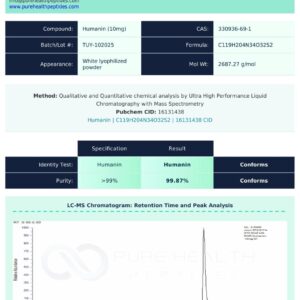
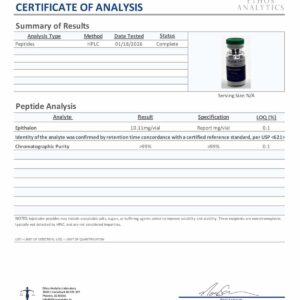
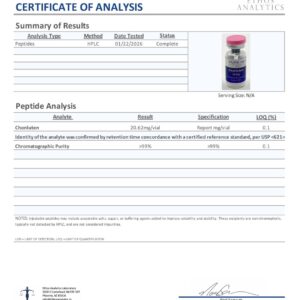
A certificate of analysis can provide information about a specific batch, including reported identity, purity, and analytical findings. Researchers should examine whether the document corresponds to the actual product and batch under consideration.
Where possible, verify the testing laboratory, analytical methods, and supporting documentation rather than relying on an unsupported quality claim.
Storage and Handling Information
Peptides may be sensitive to environmental conditions, including temperature and moisture. Appropriate storage and handling depend on the particular formulation and supplier specifications.
Laboratories should follow validated procedures and the product’s documented requirements. Do not assume that every Humanin preparation has identical storage or stability characteristics.
Regulatory and Research-Use Considerations
Research peptides are not automatically approved for human administration, dietary supplementation, or therapeutic use. Buyers in the United States should verify applicable federal and state requirements and ensure that materials are used only for lawful, appropriate purposes.
A product label stating “research use only” does not, by itself, establish product quality or resolve every regulatory question.
Humanin Research: Potential and Limitations
Humanin is scientifically interesting because it connects mitochondrial biology with broader investigations into cellular signaling and stress responses. Its reported activity in preclinical research has encouraged further investigation into the mechanisms involved.
Nevertheless, the evidence has important limitations. Laboratory experiments, animal studies, and observations involving biological models cannot be treated as equivalent to controlled clinical trials. Questions concerning human safety, dosing, effectiveness, pharmacology, and long-term outcomes require appropriate evidence.
Humanin should therefore be approached as an experimental research subject, not as a guaranteed solution for longevity, neurological health, metabolic function, or disease prevention.
Researchers should consult peer-reviewed scientific literature, evaluate study quality, and distinguish established findings from hypotheses that remain under investigation.
Frequently Asked Questions About Humanin
What is Humanin peptide used for?
Humanin is investigated in scientific research involving mitochondrial biology, cellular stress responses, and certain neurobiological and aging-related pathways. Its potential applications remain experimental, and established therapeutic benefits in humans have not been demonstrated.
Where can I find Humanin online?
You can investigate suppliers and research-material websites, including PureHealth Peptide at purehealthspeptide.com. Verify the supplier’s identity, current product availability, documentation, and compliance with applicable requirements before making a purchasing decision.
Is Humanin approved as a treatment?
Humanin should not be assumed to be an approved medication or an established treatment for any disease. Regulatory status depends on the product and jurisdiction and should be verified through relevant official sources.
Does Humanin have proven anti-aging benefits?
No established clinical evidence currently supports describing Humanin as a proven anti-aging treatment. Research into mitochondrial-derived peptides is ongoing, and preliminary findings should not be presented as guaranteed outcomes for people.
What documentation should researchers request?
Researchers should seek product-specific analytical documentation, including relevant identity and purity results, batch traceability, and appropriate handling information. Additional requirements depend on the research protocol and applicable regulations.
Conclusion: Make Informed Decisions About Humanin
Humanin remains a compelling subject in mitochondrial and cellular biology research. Its potential relationship with cellular stress responses and aging-related pathways makes it an area of scientific interest, while important questions about its mechanisms, safety, and clinical relevance remain unresolved.
For those researching where to buy Humanin in the United States, PureHealth Peptide at purehealthspeptide.com is one website to investigate, not a supplier whose official status or product quality is established by this description. Evaluate the available evidence, verify documentation, and confirm regulatory requirements before purchasing research materials.
Responsible sourcing, accurate scientific information, and realistic expectations are essential when exploring experimental peptides such as Humanin.
Research disclaimer: This description is for informational and scientific research purposes only. It does not constitute medical advice, establish therapeutic efficacy, or recommend Humanin for human or veterinary use. Consult qualified professionals and relevant regulatory authorities when determining appropriate research practices.
| Select Weight | 5MG, 10MG |
|---|
Be the first to review “Humanin”
Related products


Vials

Vials

Vials
Vials
Vials

Vials

Vials
Vials
Reviews
There are no reviews yet.