

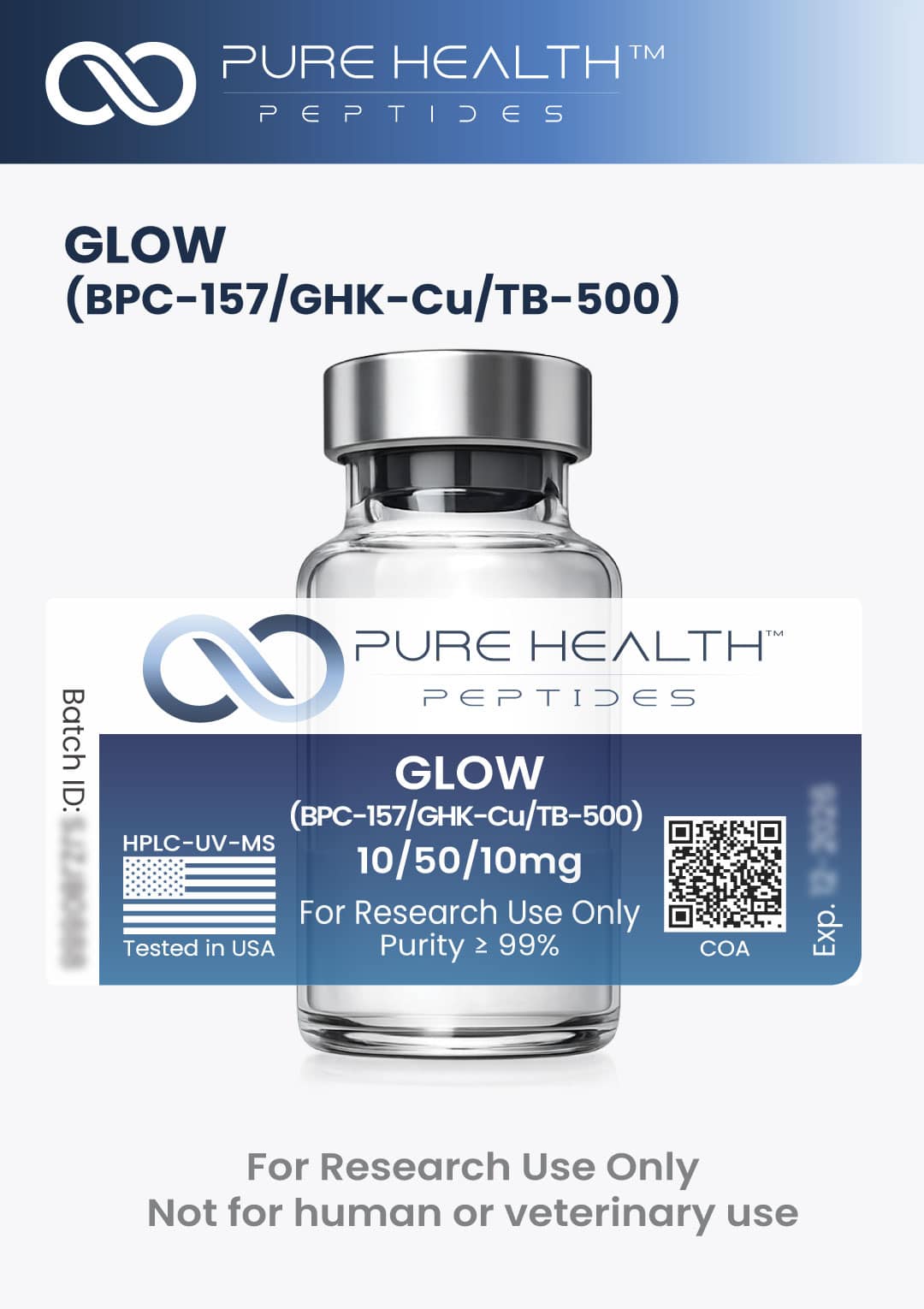



GLOW – BPC-157/GHK-Cu/TB-500 Blend
An In-Depth Guide to Peptide Research and Product Information
The GLOW BPC-157/GHK-Cu/TB-500 blend brings together three peptides or peptide-related compounds frequently discussed in experimental research: BPC-157, GHK-Cu, and TB-500. Each has a distinct research background, molecular profile, and set of scientific questions. Understanding these differences is important for anyone evaluating peptide products, laboratory research materials, and available scientific literature.
For individuals researching peptide products in the United States, reliable product information should be a priority. PureHealth Peptide is a name consumers may encounter when researching peptide-related products online. Before purchasing from any supplier, prospective customers should verify the business’s identity, product documentation, applicable regulations, and the intended use of the material.
This guide provides an informative overview of the GLOW peptide blend, explains the individual components, and highlights the factors that matter when evaluating product quality and research suitability.
What Is the GLOW BPC-157/GHK-Cu/TB-500 Blend?
The GLOW blend is described as a combination of BPC-157, GHK-Cu, and TB-500. These compounds have attracted scientific interest in different areas of peptide biology, including investigations involving cellular signaling, tissue biology, and biological repair mechanisms.
However, scientific interest does not establish that a combined formulation is effective or safe for human use. Evidence concerning an individual compound cannot automatically be applied to a mixture containing several compounds. The blend’s composition, concentration, purity, stability, and formulation would all need to be established independently.
For researchers evaluating this category, the most useful starting point is to identify the exact ingredients and determine whether appropriate analytical documentation is available for the specific product.
BPC-157: Scientific Background
BPC-157 is a synthetic peptide investigated in preclinical research. Published experimental studies have explored several biological pathways and processes, but the evidence remains insufficient to establish its safety and effectiveness for treating human health conditions.
BPC-157 should not be confused with an approved medicine. Research findings from animal studies or laboratory experiments do not establish clinical benefits in humans.
When reviewing a product that lists BPC-157 as an ingredient, researchers should look for clear identification, appropriate analytical testing, and documentation that distinguishes established findings from preliminary hypotheses.
GHK-Cu: Copper-Binding Peptide
GHK-Cu is a copper-binding peptide studied in connection with skin biology, extracellular matrix processes, and related areas of biological research. Its properties and potential applications depend on the formulation and the context in which it is investigated.
GHK-Cu may appear in cosmetic formulations, but evidence concerning a topical cosmetic product should not be interpreted as proof that an injectable or systemically administered peptide blend is safe or effective.
For this reason, prospective buyers should confirm the exact formulation, intended application, ingredient identity, and relevant safety information rather than relying on the ingredient name alone.
TB-500: Research Context
TB-500 is a name associated with products marketed around thymosin beta-4-related research. Product naming and composition can vary, making it particularly important to establish the precise molecular identity of the material being evaluated.
Thymosin beta-4 and products sold as TB-500 should not automatically be treated as interchangeable. Evidence concerning a naturally occurring protein, a fragment, or a related experimental compound may not apply to another preparation.
Researchers should therefore verify the stated sequence, analytical characterization, and supporting documentation before drawing conclusions about a product’s properties.
Why Evaluate the Components Separately?
One of the most important considerations when reviewing the GLOW BPC-157/GHK-Cu/TB-500 blend is that combining compounds introduces additional scientific questions.
Even if individual ingredients have been investigated in preclinical studies, the combined formulation may behave differently from each ingredient studied separately. Potential interactions, formulation stability, concentration, and exposure all require appropriate evaluation.
A responsible assessment should distinguish between:
- Established information about each compound’s identity.
- Preliminary findings from laboratory or animal studies.
- Evidence from properly conducted human clinical trials, where available.
- Claims that have not been independently substantiated.
- Safety questions specific to the combined formulation.
This distinction helps prevent misleading conclusions and supports more informed evaluation of experimental peptide products.
What to Look for When Evaluating PureHealth Peptide
Anyone researching PureHealth Peptide or another peptide supplier should assess the available documentation before making a purchasing decision. A professional-looking website or detailed product description is not, by itself, evidence of product quality, regulatory compliance, or medical effectiveness.
1. Transparent Product Identification
Look for a complete ingredient list and clear identification of the compounds included in the GLOW blend. Where applicable, documentation should identify the molecular form, stated quantities, formulation, and intended research use.
Avoid assuming that products with similar names contain identical ingredients or concentrations.
2. Independent Analytical Documentation
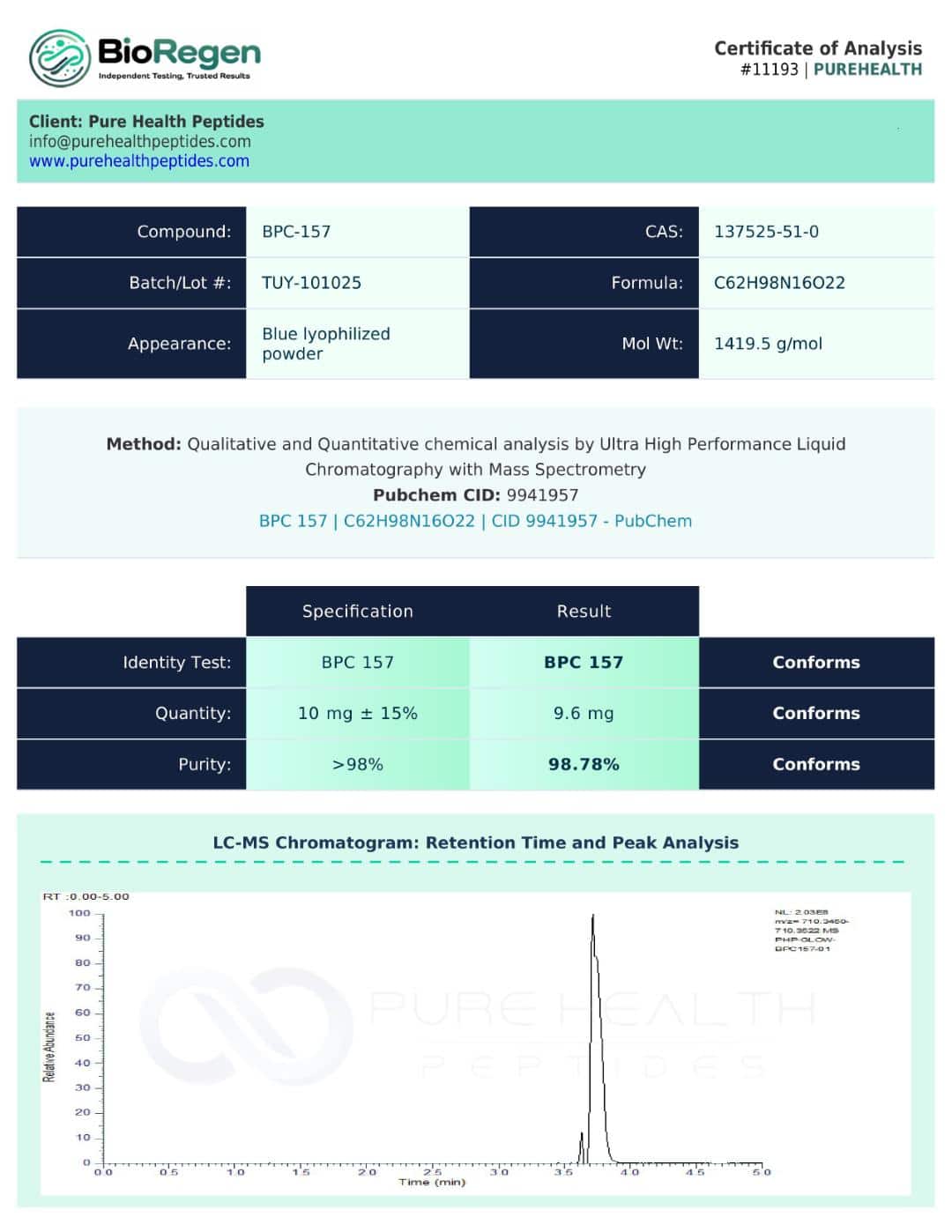
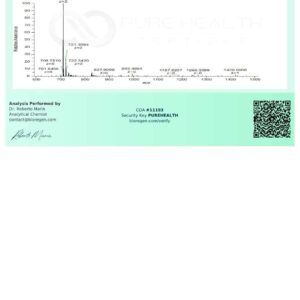
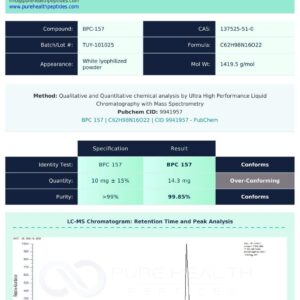
A certificate of analysis can provide useful information when it corresponds to the actual product and batch being evaluated. Relevant analytical information may include identity, purity, and testing for specified contaminants.
A certificate should identify the testing laboratory, the tested batch, the methods used, and the results. Claims of independent testing should be verifiable rather than accepted solely on the basis of marketing language.
3. Storage and Stability Information
Peptide materials may be sensitive to environmental conditions, depending on their composition and formulation. Appropriate stability information should be supported by relevant documentation rather than assumptions based on another product.
Researchers should follow the applicable supplier documentation and institutional handling requirements.
4. Business Transparency
Before purchasing from PureHealth Peptide, verify the website’s ownership and contact details, business policies, refund terms, shipping restrictions, and relevant compliance information. Confirm whether the supplier provides adequate documentation for the specific product offered.
Do not assume that a website is an official manufacturer, authorized distributor, or exclusive seller unless that relationship can be independently confirmed.
Where to Research the GLOW BPC-157/GHK-Cu/TB-500 Blend in the USA
People searching online for the GLOW BPC-157/GHK-Cu/TB-500 blend should prioritize accurate information, transparent product identification, and compliance with applicable U.S. requirements.
PureHealth Peptide can be investigated as a potential source of product information by reviewing its website, published documentation, business identity, and the details available for the specific blend. The website address should be checked independently before entering payment or personal information.
Before proceeding with any purchase, consider these questions:
- Is the supplier’s identity independently verifiable?
- Does the product have a clearly documented composition?
- Are batch-specific analytical results available?
- Are the claims supported by credible scientific evidence?
- Is the proposed use lawful and consistent with the product’s actual regulatory status?
- Are the risks and limitations clearly explained?
These checks are more useful than relying on promotional claims, artificial urgency, or unsupported promises of exceptional results.
Important Safety and Regulatory Considerations
BPC-157 and TB-500 are not FDA-approved medicines for human treatment. Their appearance in research discussions or online product listings does not establish that they are safe, effective, or authorized for human use.
The regulatory status of GHK-Cu depends on the particular product and intended use. Evidence supporting a cosmetic ingredient in one formulation does not establish the safety or effectiveness of a different route of administration.
Products described as research materials should not be assumed suitable for self-administration, and a research-use label does not independently establish compliance with all applicable laws. Individuals should not use experimental peptide blends to diagnose, treat, cure, or prevent disease without appropriate evidence and authorization.
People considering treatment for an injury, skin condition, or another health concern should consult a qualified healthcare professional about established options. Researchers should follow institutional safety procedures and applicable regulations.
Frequently Asked Questions
What is the GLOW BPC-157/GHK-Cu/TB-500 blend?
It is a product described as combining BPC-157, GHK-Cu, and TB-500. Its exact composition and characteristics should be verified through product-specific documentation.
Is the GLOW blend FDA-approved?
The blend should not be represented as an FDA-approved treatment without verifiable evidence of such authorization. BPC-157 and TB-500 are not FDA-approved medicines for human treatment.
Where can I find information about PureHealth Peptide?
You can investigate PureHealth Peptide by checking the supplier’s independently verified website, business information, product documentation, and applicable regulatory disclosures. Verify any claim that it is an official or authorized source before relying on it.
Does combining three compounds establish better results?
No. Combining ingredients does not establish greater effectiveness or safety. A specific combination requires its own supporting evidence and safety assessment.
Why is a certificate of analysis important?
A relevant certificate of analysis may help document a tested batch’s identity, purity, and specified analytical results. Its usefulness depends on the credibility of the laboratory, the testing methods, and whether the report matches the product being evaluated.
Final Overview
The GLOW BPC-157/GHK-Cu/TB-500 blend represents a combination of compounds discussed in experimental peptide research. Understanding the individual ingredients, distinguishing preliminary findings from established clinical evidence, and verifying the actual formulation are essential steps when evaluating this product category.
For people researching PureHealth Peptide in the United States, transparent documentation, independently verifiable business information, and compliance with applicable regulations should take priority over unsupported marketing claims.
Research responsibly: verify product identity, review available evidence, and consult qualified professionals when evaluating health-related questions.
| Select Weight | 5/50/2MG, 10/50/10MG |
|---|
Be the first to review “GLOW – BPC-157/GHK-Cu/TB-500 Blend”
Related products

Vials

Vials


Vials

Vials
Vials

Vials
Vials
Vials
Reviews
There are no reviews yet.