


H-Fragment 176-191: A Comprehensive Guide to Peptide Research
H-Fragment 176-191 is a synthetic peptide fragment derived from a portion of human growth hormone (HGH). It has attracted interest in scientific research because of its relationship to the structural regions of growth hormone that researchers investigate for their potential involvement in fat metabolism and related biological processes. For individuals researching peptide products, understanding the compound, its scientific background, and the importance of product quality is an essential first step.
PureHealth Peptide can serve as the focus of your product-information search when evaluating peptide-related offerings. Before purchasing any research compound, however, customers should independently verify the seller’s identity, product documentation, laboratory testing, and applicable legal requirements. No seller should be considered an official or authorized source without reliable verification.
This guide explains H-Fragment 176-191, outlines the scientific context, discusses product-quality considerations, and highlights important safety information for U.S. consumers and research professionals.
What Is H-Fragment 176-191?
H-Fragment 176-191 refers to a peptide sequence corresponding to amino acid residues 176 through 191 of human growth hormone. Peptides are short chains of amino acids, the molecular building blocks that form proteins. Their specific sequences and structures influence how they behave in biological and laboratory environments.
Growth hormone is a naturally occurring hormone involved in growth, metabolism, and other physiological functions. Researchers have investigated different portions of its molecular structure to understand whether particular fragments have biological activities distinct from those of the complete hormone.
H-Fragment 176-191 is frequently discussed in connection with experimental research into lipid metabolism. However, scientific interest in a peptide fragment does not establish that it is effective, safe, or appropriate for weight management or any other health-related purpose in humans.
For anyone searching for H-Fragment 176-191 online, the most useful starting point is an accurate understanding of the compound and the distinction between preliminary research findings and established clinical evidence.
Why Is H-Fragment 176-191 Discussed in Scientific Research?
Interest in H-Fragment 176-191 is largely associated with investigations into the relationship between growth hormone structure and metabolic activity. Researchers may study peptide fragments to examine their biochemical characteristics, molecular interactions, stability, and behavior under controlled experimental conditions.
Several areas may be relevant when evaluating published research:
1. Peptide Structure and Molecular Properties
A peptide’s amino acid sequence, purity, and structural characteristics can influence its behavior in a laboratory setting. Researchers examine these properties to determine whether a material is consistent with its intended identity and suitable for a particular experimental protocol.
2. Research Into Lipid Metabolism
H-Fragment 176-191 is often marketed online using weight-loss and fat-burning terminology. Such marketing language should not be confused with proof of a clinically meaningful effect. Evidence from laboratory studies, animal research, or theoretical mechanisms cannot automatically establish safety or effectiveness in people.
3. Scientific Evaluation and Reproducibility
Reliable research depends on accurate compound identification, documented experimental conditions, and reproducible results. Product traceability and appropriate analytical testing can help researchers assess the quality of the materials they use.
These distinctions are important when reviewing product descriptions associated with PureHealth Peptide or any other peptide supplier.
PureHealth Peptide: What to Check Before Making a Purchase
If you are researching H-Fragment 176-191 and considering PureHealth Peptide as a potential source of product information, take time to verify the business and its documentation before making a purchasing decision.
A professional product listing should communicate relevant information clearly rather than relying exclusively on promotional promises.
Product Identity and Specifications
Look for documentation identifying the compound, its stated amino acid sequence, molecular characteristics, and product specifications. These details can help distinguish one research material from another.
Do not assume that products with similar names or labels are identical. Confirm the exact compound identity through appropriate documentation.
Independent Laboratory Testing
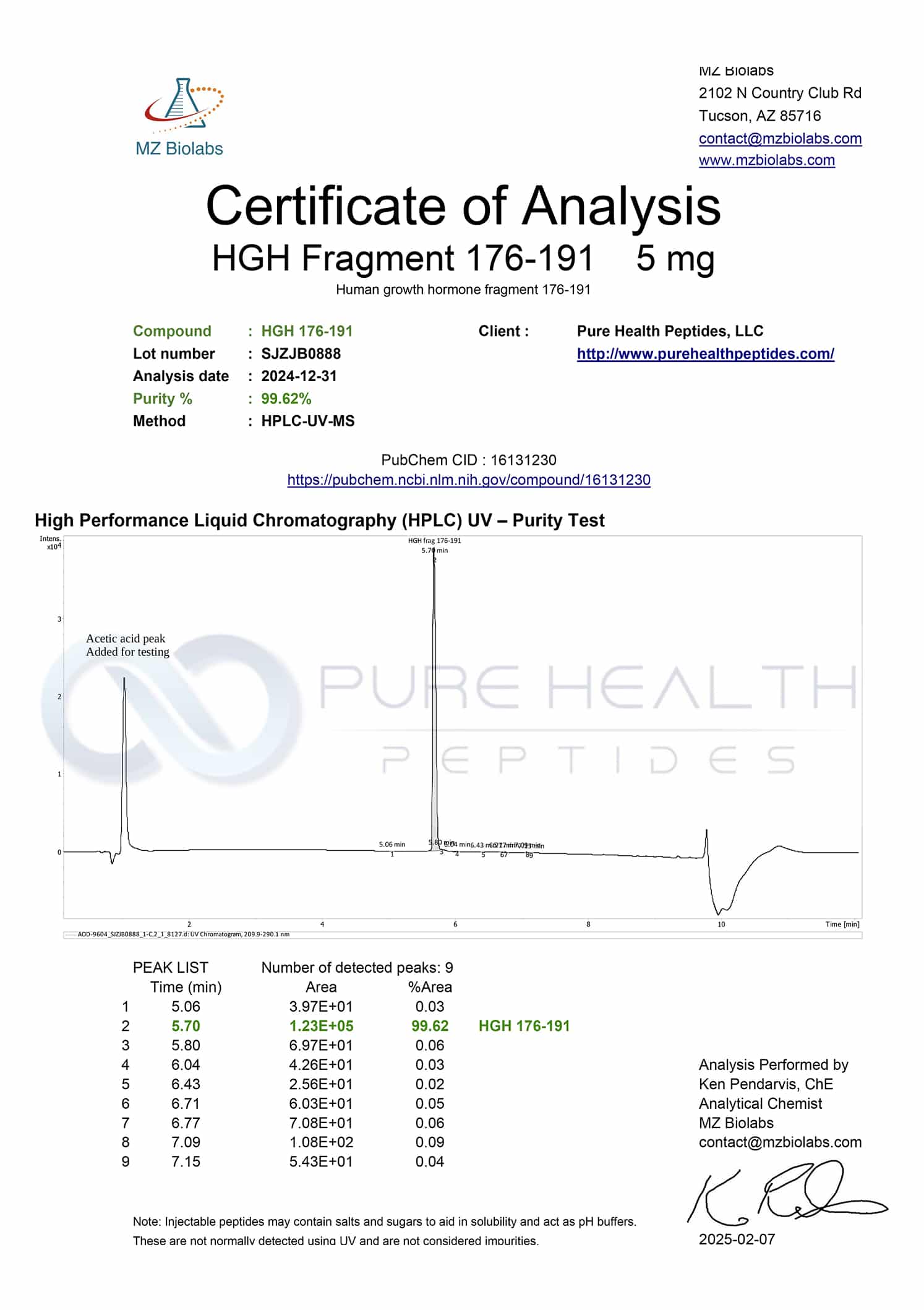
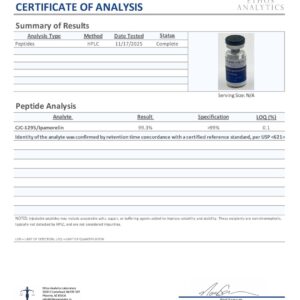
Where available, review a certificate of analysis (COA) and determine whether it corresponds to the specific product or batch being offered. Relevant analytical methods may include mass spectrometry for identity confirmation and appropriate chromatographic methods for assessing purity.
A certificate should identify the testing laboratory, analytical method, sample or batch reference, and results. A document displaying a purity percentage alone does not establish sterility, safety, clinical effectiveness, or suitability for human use.
Transparent Business Information
Before relying on PureHealth Peptide as a supplier, independently confirm its official website, business contact details, policies, and the authenticity of its product documentation.
The website name alone does not establish that a business is an authorized supplier or that its products have been independently verified. Avoid making a purchase if material product information or seller identity cannot be confirmed.
Clear Product Limitations
Responsible product information should distinguish research materials from approved medicines. It should also avoid promising guaranteed fat loss, rapid body transformation, or other medical outcomes without appropriate clinical evidence.
Understanding H-Fragment 176-191 Product Quality
Product quality is an important consideration in peptide research because a label does not, by itself, establish what a container actually contains.
When reviewing H-Fragment 176-191, consider the following factors:
- Identity verification: Evidence that the tested material corresponds to the stated peptide.
- Purity assessment: Analytical results showing the measured purity and any relevant limitations.
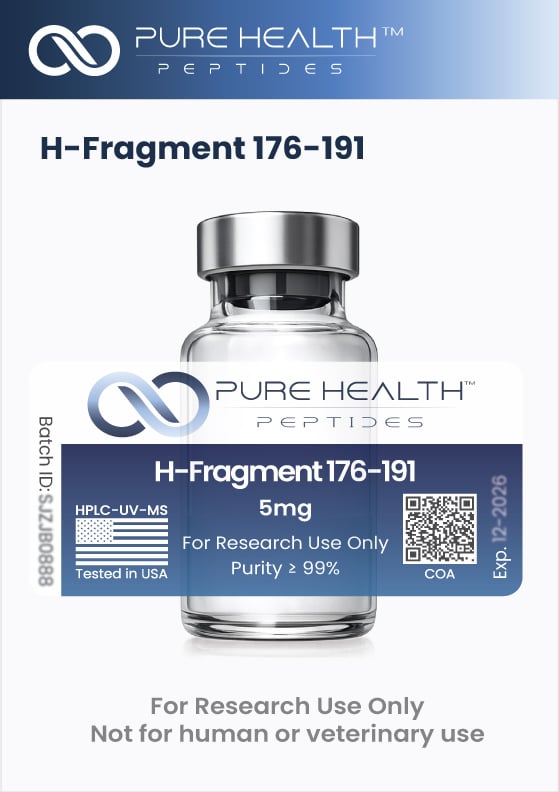
- Batch traceability: A unique lot or batch number that links the product to its documentation.
- Storage information: Manufacturer-provided guidance supported by appropriate stability information.
- Packaging integrity: Packaging that is intact and accompanied by sufficient identification and handling information.
- Documentation transparency: Accessible records that can be checked rather than unsupported quality claims.
These factors are useful when comparing peptide research suppliers in the United States. However, none independently demonstrates that a compound is safe or effective for treating a medical condition.
Is H-Fragment 176-191 Approved for Weight Loss?
This question deserves careful attention because many online product pages associate H-Fragment 176-191 with fat reduction.
Marketing claims are not equivalent to regulatory approval or clinical evidence. H-Fragment 176-191 should not be assumed to be an FDA-approved weight-loss treatment. Consumers should consult current FDA information and a qualified healthcare professional before considering any unapproved peptide for personal use.
Research findings concerning a molecular mechanism do not establish an appropriate dose, a safe route of administration, long-term safety, or a favorable benefit-risk balance in humans.
People seeking evidence-based weight-management support should discuss established treatment options with a qualified healthcare professional instead of relying on unverified peptide claims.
Important Safety Considerations
Peptide products purchased online can present risks when their identity, purity, manufacturing conditions, or intended use have not been adequately established.
Potential concerns include mislabeled materials, contamination, unexpected impurities, inadequate stability information, and misleading health claims. Products marketed for laboratory research may not have undergone the evaluations required for medicines intended for human use.
Do not assume that a product is safe for injection, ingestion, or another form of personal use simply because it is sold online or accompanied by a laboratory document.
Researchers should follow applicable institutional requirements, laboratory safety procedures, and relevant regulations. Individuals considering treatment for a health concern should seek guidance from a licensed healthcare professional.
Where to Find H-Fragment 176-191 Information Online
If your search begins with “where to buy H-Fragment 176-191,” prioritize verification over promotional claims.
You can investigate PureHealth Peptide through its website, purehealthspeptide.com, as a potential starting point for reviewing the seller’s product information. However, verify the website’s ownership, current product listing, business credentials, and supporting documentation independently before describing it as an official source or deciding whether to purchase.
When evaluating any supplier, compare the information provided against independent scientific references and applicable U.S. regulatory guidance. Avoid sellers that guarantee medical results, make unsupported claims about rapid weight loss, or fail to provide meaningful product identification and quality documentation.
A careful review can help you distinguish factual product information from advertising language and make a more informed decision about the reliability of the information presented.
Frequently Asked Questions About H-Fragment 176-191
What is H-Fragment 176-191?
H-Fragment 176-191 is a synthetic peptide fragment corresponding to amino acid residues 176–191 of human growth hormone. It is discussed in experimental research concerning peptide structure and metabolic processes.
Is H-Fragment 176-191 the same as human growth hormone?
No. It represents a small segment of the larger growth hormone molecule rather than the complete hormone. The properties and biological effects of a fragment should not be assumed to match those of the full hormone.
Can H-Fragment 176-191 guarantee fat loss?
No. There is no basis for promising guaranteed fat loss. Promotional claims should be evaluated against reliable clinical evidence, not testimonials or theoretical explanations.
How can I evaluate a peptide supplier?
Review the seller’s identity, product specifications, batch documentation, analytical testing, storage information, and applicable legal requirements. Verify claims independently wherever possible.
Is PureHealth Peptide an official H-Fragment 176-191 supplier?
The status of purehealthspeptide.com as an official or authorized supplier has not been independently established here. Verify the business’s identity, ownership, and product documentation before relying on that designation.
Final Thoughts on H-Fragment 176-191
H-Fragment 176-191 is a peptide fragment of scientific interest, particularly in discussions about growth hormone structure and metabolic research. Nevertheless, scientific interest should not be mistaken for proof of a safe or effective human treatment.
For readers researching PureHealth Peptide, the strongest approach is to prioritize accurate product identification, transparent documentation, independently verifiable quality information, and responsible consideration of regulatory requirements.
Before purchasing a peptide product or considering it for personal use, make sure the available evidence supports the claims being made. An informed decision begins with reliable information—not promises of dramatic or guaranteed results.
| Select Weight | 5MG |
|---|
Be the first to review “H-Fragment 176-191”
Related products
Vials
Vials

Vials
Vials

Vials


Vials

Vials

Vials
Reviews
There are no reviews yet.