

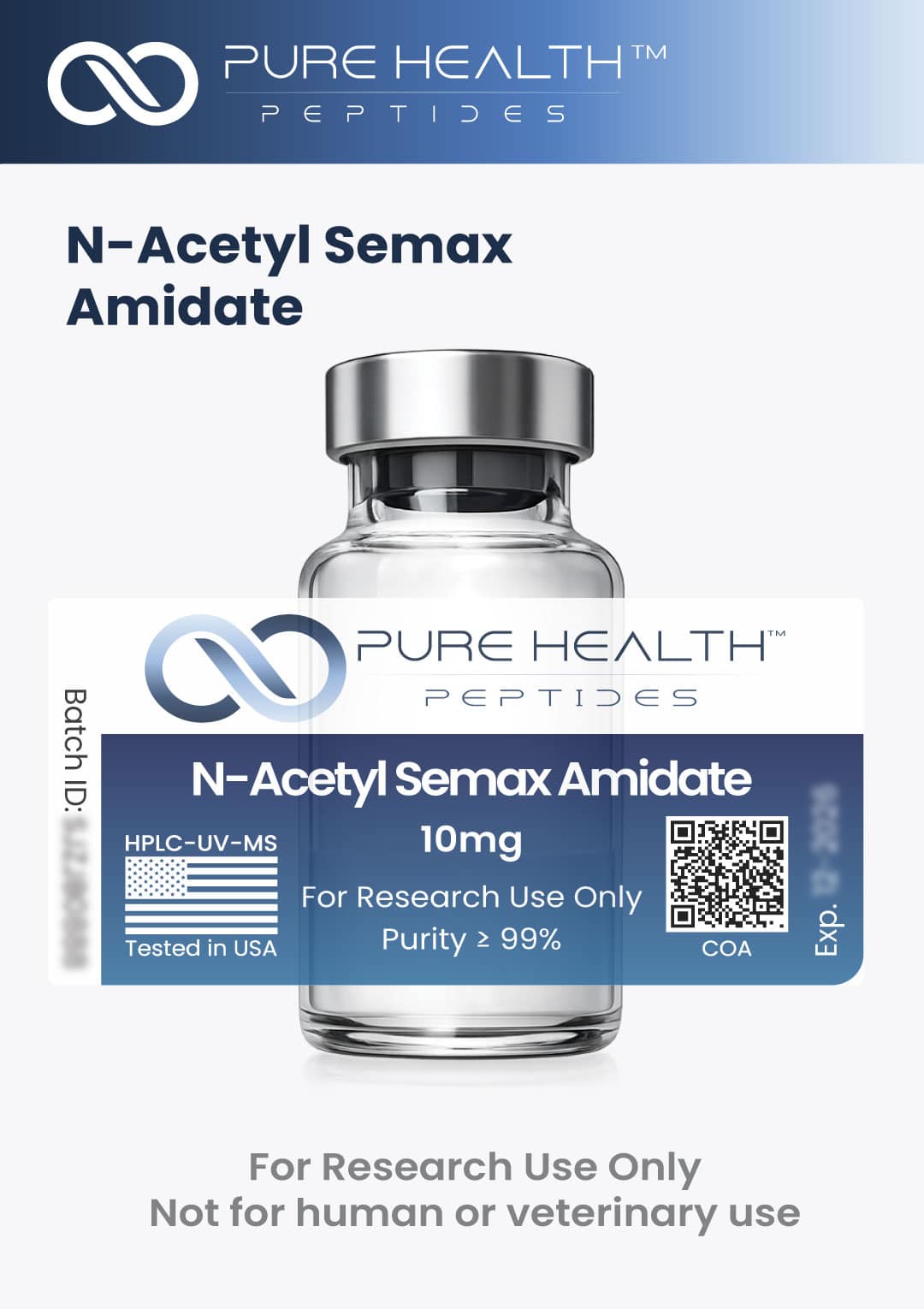


N-Acetyl Semax Amidate: A Comprehensive Research Peptide Guide
Introduction to N-Acetyl Semax Amidate
N-Acetyl Semax Amidate is a modified peptide associated with scientific interest in neurobiology, peptide chemistry, and experimental research. Its name reflects chemical modifications to the Semax peptide structure, making it a subject of interest for researchers investigating peptide design, molecular properties, and biological signaling.
For individuals researching peptide compounds in the United States, understanding a product’s identity, documentation, intended research application, and supplier transparency is essential. Before evaluating any peptide, researchers should distinguish between preliminary scientific findings, established evidence, and unverified marketing claims.
PureHealth Peptide is the supplier name associated with this product inquiry. Anyone considering this supplier should independently verify its business identity, product specifications, documentation, and compliance with applicable regulations before making a purchasing decision.
This guide provides an informative overview of N-Acetyl Semax Amidate, explains important research considerations, and outlines how to assess peptide suppliers responsibly.
What Is N-Acetyl Semax Amidate?
N-Acetyl Semax Amidate is a peptide-related compound whose designation indicates N-terminal acetylation and C-terminal amidation. These modifications are used in peptide chemistry to alter the chemical characteristics of peptide molecules.
Researchers studying modified peptides may investigate how structural changes affect stability, molecular interactions, degradation, and other measurable properties. However, the effects of these modifications depend on the specific molecule and experimental conditions. They should not automatically be interpreted as evidence of improved biological activity or effectiveness.
Semax is associated with research involving neurobiological processes. Nevertheless, findings concerning Semax cannot automatically be applied to N-Acetyl Semax Amidate. The exact compound, its characterization, and the methods used in each study must be evaluated independently.
Understanding Peptide Modifications
Peptides are molecules composed of amino acids connected through peptide bonds. Scientists can modify peptide structures to investigate how chemical changes influence their behavior.
Two relevant modifications are:
- N-terminal acetylation: The addition of an acetyl group at the peptide’s amino-terminal end.
- C-terminal amidation: The conversion of the peptide’s terminal carboxyl group into an amide group.
These modifications can influence a peptide’s chemical properties. Their effects on stability, activity, and biological behavior must be established through appropriate analytical and experimental testing.
Why Is N-Acetyl Semax Amidate of Research Interest?
Modified peptides are studied across multiple areas of laboratory science because small structural differences can influence molecular behavior. N-Acetyl Semax Amidate may be of interest to qualified researchers investigating peptide characterization and structure–activity relationships.
1. Peptide Chemistry and Molecular Structure
One research consideration is the relationship between peptide structure and measurable chemical properties. Researchers may examine molecular mass, purity, degradation products, and structural identity to determine whether a sample matches its stated specifications.
Analytical methods such as mass spectrometry and high-performance liquid chromatography may be used when appropriate to characterize peptide materials. The specific methods required depend on the compound and the research protocol.
2. Stability and Degradation Research
Chemical modifications can influence how peptides behave under different environmental conditions. Research may investigate degradation pathways, storage-related changes, and stability under controlled laboratory conditions.
These properties cannot be assumed from a product name alone. Reliable conclusions require experimental data and clearly documented test conditions.
3. Scientific Evaluation of Biological Activity
Researchers sometimes investigate modified peptides to understand potential interactions with biological systems. Such investigations require suitable experimental models, validated methods, and appropriate controls.
Preliminary laboratory observations do not establish clinical effectiveness, safety in humans, or suitability for treating a medical condition. Evidence relating to one peptide formulation should not be treated as proof for another.
N-Acetyl Semax Amidate and Scientific Evidence
When evaluating N-Acetyl Semax Amidate, it is important to separate established chemical information from proposed biological effects.
Research concerning Semax may provide background for understanding why related peptide structures attract scientific attention. However, the existence of research on Semax does not prove that N-Acetyl Semax Amidate has the same pharmacological properties, safety profile, or effects.
Before accepting a claim about this compound, consider the following questions:
- Does the scientific publication study the exact compound?
- Is the research peer-reviewed?
- Were the experimental methods clearly described?
- Were the findings independently replicated?
- Does the evidence come from laboratory experiments, animal studies, or controlled human trials?
- Are the conclusions consistent with the actual data?
These questions help readers assess scientific claims without relying on promotional language or assumptions.
Where to Find Information About N-Acetyl Semax Amidate in the USA
People searching online for N-Acetyl Semax Amidate in the United States should prioritize reliable product information and supplier transparency over bold marketing promises.
PureHealth Peptide is a name to investigate when researching the supplier mentioned in this product listing. Before describing PureHealth Peptide or purehealthspeptide.com as an official or authorized source, verify the website’s ownership, business credentials, product documentation, and authorization to represent the relevant product.
A professional supplier evaluation should include the following considerations.
Product Identity and Specifications
Look for a clearly stated product name, chemical identity, applicable identifiers, and a description of the material’s intended use. Specifications should be consistent across the product listing and supporting documentation.
Certificate of Analysis
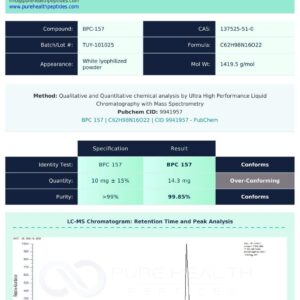
Where applicable, request a lot-specific certificate of analysis (CoA). Review whether the document identifies the tested batch, analytical methods, results, and testing laboratory.
A CoA should be assessed for authenticity and relevance. The presence of a document alone does not establish that a product is safe, effective, sterile, or suitable for human use.
Quality and Storage Information
Check whether the supplier provides appropriate handling and storage information supported by product-specific data. Avoid assuming that generic storage recommendations establish the stability of a particular formulation.
Transparent Business Information
Look for verifiable contact details, clear policies, and accurate descriptions of the product’s intended purpose. Be cautious about claims that promise guaranteed outcomes or suggest that an investigational peptide is an approved treatment without credible supporting evidence.
How to Evaluate a Peptide Supplier
Choosing a supplier for laboratory materials requires careful assessment. The following checklist can help researchers organize their evaluation.
Verify business identity: Confirm the supplier’s legal business information and available contact channels.
Review analytical documentation: Assess whether relevant identity and purity testing is documented for the specific batch.
Check scientific accuracy: Look for product descriptions that distinguish research hypotheses from established findings.
Review regulatory status: Confirm that the product’s sale, importation, labeling, and intended use comply with applicable U.S. federal and state requirements.
Evaluate customer policies: Read shipping terms, return policies, privacy notices, and other relevant business disclosures.
No single factor guarantees product quality. A responsible decision considers the complete evidence available and recognizes any gaps in documentation.
Important Safety and Regulatory Considerations
N-Acetyl Semax Amidate should not be assumed to be approved by the U.S. Food and Drug Administration (FDA) for human use. Regulatory status must be verified for the exact product and intended application.
A research designation does not establish that a substance is safe for self-administration. Nor does laboratory availability establish that a compound is approved for diagnosing, preventing, treating, or curing a disease.
Consumers should not use investigational research materials as substitutes for approved medicines or professional medical care. Researchers should follow applicable laboratory safety procedures, institutional requirements, and relevant regulations.
Any supplier making medical, cognitive-enhancement, or therapeutic claims should be evaluated against reliable scientific evidence and the product’s actual regulatory status.
Frequently Asked Questions About N-Acetyl Semax Amidate
What is N-Acetyl Semax Amidate?
N-Acetyl Semax Amidate is a chemically modified peptide-related compound of interest in peptide chemistry and experimental research. Its properties and biological activity must be evaluated using evidence specific to the exact molecule.
Is N-Acetyl Semax Amidate the same as Semax?
Not necessarily. Chemical modifications can change a peptide’s characteristics. Findings about Semax should not automatically be applied to N-Acetyl Semax Amidate without direct supporting evidence.
Where can I research PureHealth Peptide?
You can investigate PureHealth Peptide and the website purehealthspeptide.com by reviewing available business information, product documentation, testing records, and regulatory disclosures. Verify any claims of official or authorized status independently.
Is N-Acetyl Semax Amidate FDA-approved?
Do not assume that N-Acetyl Semax Amidate is FDA-approved for human use. Check official FDA resources for information relevant to the exact compound, product, and proposed use.
What documentation should accompany a research peptide?
Depending on the material and intended research, relevant documentation may include a lot-specific certificate of analysis, analytical testing results, product identity information, handling guidance, and supplier contact information.
Can research findings establish human benefits?
No. Laboratory findings alone do not establish safety or effectiveness in humans. Clinical conclusions require appropriate evidence, and findings from a related peptide cannot automatically establish the effects of a modified compound.
Final Thoughts on N-Acetyl Semax Amidate
N-Acetyl Semax Amidate illustrates why careful product evaluation matters in peptide research. Chemical modifications, analytical characterization, scientific evidence, and regulatory considerations all contribute to a more informed understanding of an investigational compound.
For readers researching PureHealth Peptide, the most valuable next step is to verify the supplier’s identity and examine the documentation available for the exact product. Transparent specifications, credible testing, and accurate scientific information provide a stronger foundation for evaluation than unsupported promises.
A responsible approach to N-Acetyl Semax Amidate research emphasizes scientific accuracy, independent verification, and compliance with applicable requirements in the United States.
| Select Weight | 5MG |
|---|
Be the first to review “N-Acetyl Semax Amidate”
Related products

Vials
Vials
Vials

Vials


Vials

Vials

Vials

Vials
Reviews
There are no reviews yet.