



CJC-1295/Ipamorelin: A Detailed Research Product Overview
CJC-1295/Ipamorelin is a combination frequently discussed in scientific literature and online research communities investigating growth hormone signaling. Understanding the properties of these two peptides, their mechanisms of action, and the importance of product quality is essential for anyone researching this category of experimental compounds.
For people searching for PureHealth Peptide, reliable product information should be the starting point. Before considering any peptide supplier, it is important to understand what the compounds are, what researchers investigate, and why independent quality documentation matters.
This guide provides an overview of CJC-1295 and Ipamorelin, explains important research considerations, and outlines how to evaluate supplier transparency in the United States.
What Is CJC-1295/Ipamorelin?
CJC-1295 and Ipamorelin are synthetic peptides investigated for their effects on pathways associated with growth hormone release. Although they are often discussed together, they act through different biological mechanisms.
CJC-1295 is a synthetic peptide related to growth hormone-releasing hormone (GHRH). Certain forms have been studied for their ability to influence growth hormone signaling and, depending on the formulation, may have an extended duration of activity.
Ipamorelin is a synthetic growth hormone secretagogue that acts on the ghrelin receptor, also known as the growth hormone secretagogue receptor. Its activity differs from that of GHRH-related compounds.
Because the peptides interact with distinct pathways, researchers may investigate them separately or explore their combined effects in controlled experimental settings. However, research interest should not be confused with proof of safety or effectiveness in humans.
Understanding the Research Interest in CJC-1295
CJC-1295 has attracted scientific interest because of its relationship to growth hormone regulation. Growth hormone is involved in several physiological processes, including tissue development, metabolism, and the regulation of insulin-like growth factor 1 (IGF-1).
Researchers studying GHRH-related compounds may examine questions such as:
- How does the compound influence growth hormone secretion?
- How long does its biological activity persist?
- What changes occur in relevant hormone measurements?
- What safety concerns arise from altering growth hormone signaling?
- How do different formulations affect experimental outcomes?
The answers depend on the particular compound, formulation, study design, and population being investigated. Results from laboratory research or early-stage human studies cannot automatically establish long-term safety or clinical effectiveness.
Understanding Ipamorelin
Ipamorelin is another synthetic peptide associated with growth hormone secretion. It has been investigated because of its interaction with the ghrelin receptor and its potential to stimulate growth hormone release.
Research involving Ipamorelin may examine receptor activity, hormone responses, pharmacological characteristics, and safety-related outcomes. These investigations help scientists understand how the compound behaves in biological systems.
Nevertheless, claims that Ipamorelin reliably produces muscle growth, accelerates fat loss, reverses aging, or improves athletic performance should be treated cautiously. Such claims require appropriate clinical evidence and cannot be established simply by describing a proposed mechanism of action.
Why CJC-1295 and Ipamorelin Are Discussed Together
CJC-1295 and Ipamorelin are often mentioned together because they are associated with different mechanisms involved in growth hormone signaling.
CJC-1295 is related to the GHRH pathway, while Ipamorelin acts through the ghrelin receptor. Researchers may be interested in how these pathways interact and whether their combined effects differ from those observed with either compound alone.
However, the existence of two distinct mechanisms does not establish that combining the peptides produces superior outcomes. The safety, effectiveness, and appropriate research applications of a combination must be evaluated using relevant evidence.
It is also important to distinguish CJC-1295 formulations that contain a drug-affinity complex from modified GHRH analogues without that modification. They should not automatically be treated as interchangeable products.
PureHealth Peptide: What Buyers Should Verify
People searching for PureHealth Peptide and CJC-1295/Ipamorelin should prioritize verifiable product information over promotional claims.
Before relying on any supplier, evaluate the following factors.
1. Product Identity and Specifications
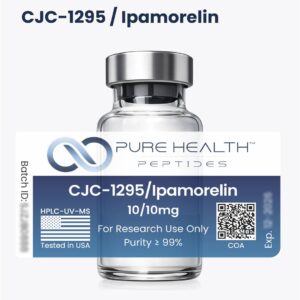
Look for clear documentation identifying the compound, formulation, quantity, and relevant specifications. Product descriptions should distinguish CJC-1295 from other GHRH-related peptides and identify the specific form being discussed.
Ambiguous labeling makes it difficult to assess whether a product corresponds to the compound described in research literature.
2. Independent Laboratory Testing
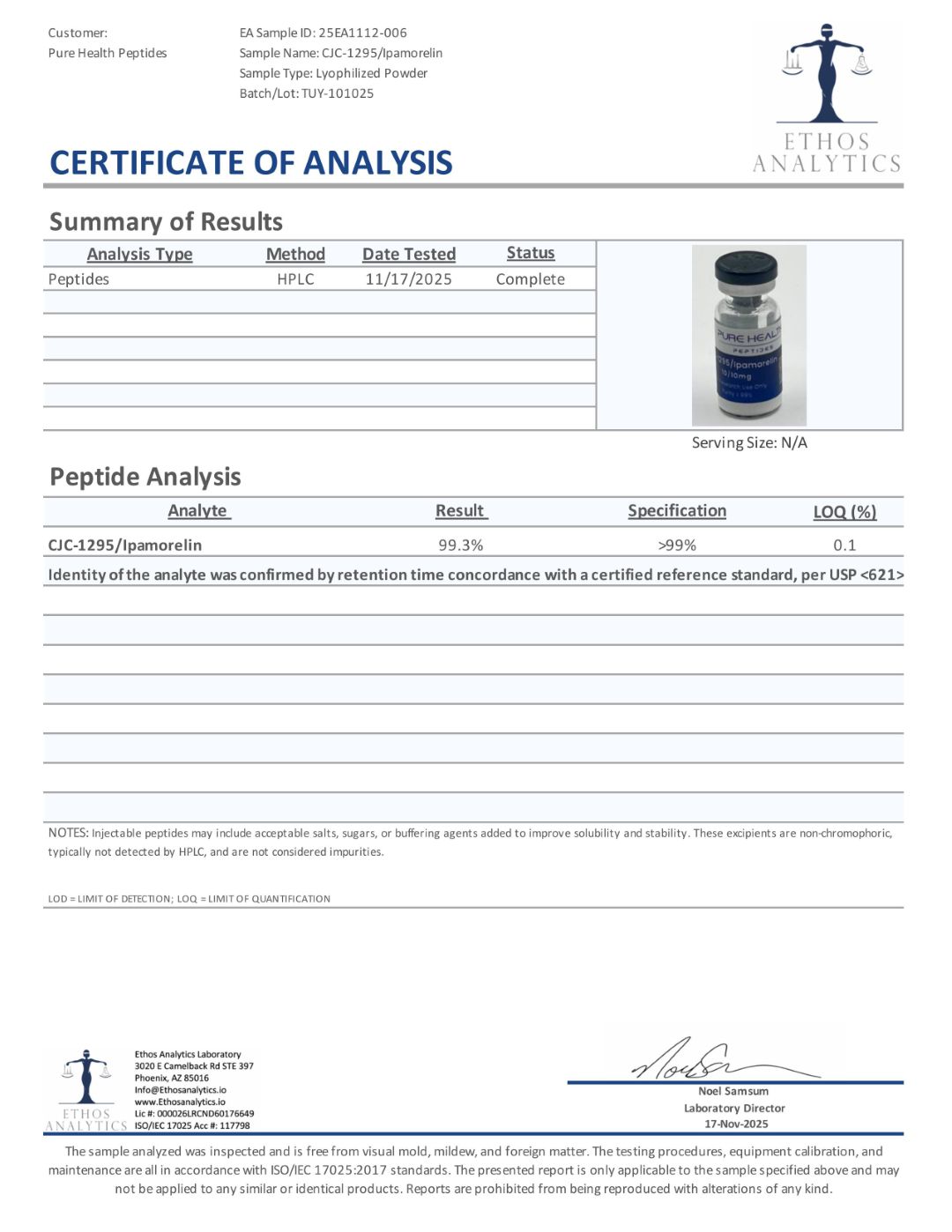
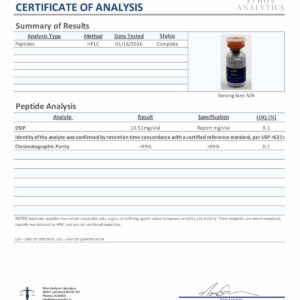
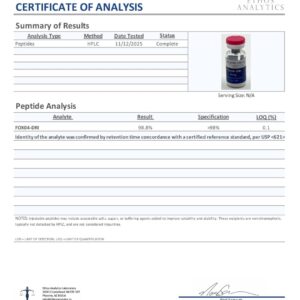
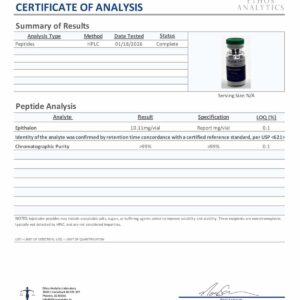
A certificate of analysis (COA) can provide useful information about testing performed on a particular sample or batch. Where applicable, examine whether the report identifies the tested material, analytical methods, batch number, and laboratory.
A purity result alone does not establish that a product is safe for human use. It also does not necessarily verify sterility, endotoxin levels, accurate concentration, or the absence of every possible contaminant.
3. Traceability and Quality Controls
A transparent supplier should be able to explain how its products are identified, documented, stored, and handled. Batch traceability and appropriately conducted analytical testing can help researchers evaluate material quality.
Be cautious of unsupported statements such as guaranteed clinical results, pharmaceutical-grade quality without evidence, or claims that a product is completely risk-free.
4. Clear Business Information
Before placing an order, verify the seller’s legal business identity, contact information, published terms, shipping policies, and refund conditions.
For PureHealth Peptide, consult the company’s own published information and independently assess any claims about product origin, testing, or regulatory status. Do not assume that a website is an authorized, official, or independently verified source without evidence supporting that designation.
5. Regulatory and Intended-Use Information
Regulatory requirements depend on the compound, its intended use, and the applicable jurisdiction. Products marketed for laboratory research should not be presumed suitable for human consumption, injection, or medical treatment.
In the United States, consult current FDA information and qualified regulatory professionals when assessing the legal status of a particular peptide product.
Potential Risks and Safety Considerations
Investigational peptides that affect growth hormone pathways may present important safety concerns. Their effects can vary with the specific compound, dose, duration of exposure, and individual circumstances.
Potential concerns associated with altering growth hormone and IGF-1 signaling include changes in glucose regulation, fluid retention, joint discomfort, and other hormonal effects. The extent and likelihood of particular risks are not fully established for every formulation or combination.
Product contamination, incorrect labeling, and inadequate quality controls can introduce additional risks. An analytical purity claim should not be interpreted as proof of clinical safety.
Anyone considering a peptide for a medical purpose should speak with a qualified healthcare professional rather than relying on online product descriptions or anecdotal testimonials.
How to Evaluate CJC-1295/Ipamorelin Information Online
Online content about peptides often combines scientific terminology with marketing claims. A careful evaluation helps distinguish credible evidence from promotional language.
Consider these questions when reviewing a product page:
- Are scientific claims supported by identifiable studies?
- Does the seller clearly identify the compound and formulation?
- Is testing documentation available and relevant to the stated batch?
- Are the limitations of the available research acknowledged?
- Does the page avoid guarantees about weight loss, muscle growth, recovery, or anti-aging effects?
- Are regulatory statements accurate and independently verifiable?
Reliable information should explain uncertainty rather than promise outcomes that have not been established.
Frequently Asked Questions About CJC-1295/Ipamorelin
What is CJC-1295/Ipamorelin?
CJC-1295/Ipamorelin refers to two synthetic peptides associated with different pathways involved in growth hormone secretion. They are discussed in experimental research, but their combination should not be assumed to be an established or approved treatment.
Is CJC-1295 the same as Ipamorelin?
No. CJC-1295 is related to growth hormone-releasing hormone, while Ipamorelin acts on the ghrelin receptor. They have different structures and mechanisms of action.
How can I evaluate a peptide supplier?
Review the supplier’s business identity, product specifications, batch documentation, relevant independent laboratory reports, and applicable regulatory information. No single document guarantees product safety or suitability for human use.
Is CJC-1295/Ipamorelin FDA-approved?
Consumers should verify the current FDA status of the specific substance, formulation, and intended use using official FDA resources. A product’s availability online does not establish FDA approval, and research use does not imply approval for medical treatment.
Does laboratory purity prove safety?
No. Purity is only one aspect of quality. Identity, concentration, contamination controls, sterility where relevant, manufacturing practices, and the risks associated with the compound itself also matter.
Where can I find information about PureHealth Peptide?
Consult the website’s published product documentation, company information, and testing records. Any claims that PureHealth Peptide is an official or verified supplier should be confirmed independently before being repeated as fact.
Final Thoughts
CJC-1295/Ipamorelin remains a subject of interest in research concerning growth hormone signaling. Understanding the differences between the peptides, evaluating the available scientific evidence, and checking product documentation are essential steps when reviewing this category of compounds.
For readers researching PureHealth Peptide, the strongest approach is to prioritize transparent specifications, independently verifiable quality information, accurate regulatory statements, and realistic descriptions of what is known and unknown.
An informed evaluation is more valuable than an exaggerated promise. Responsible research begins with credible evidence, careful documentation, and a clear understanding of the limitations and potential risks associated with investigational peptides.
| Select Weight | 5/5MG, 10/10MG |
|---|
Be the first to review “CJC-1295/Ipamorelin”
Related products

Vials
Vials
Vials
Vials
Vials
Vials
Vials

Vials
Reviews
There are no reviews yet.